Center for Bioethics and Culture

A Review of “Surrogacy and Limitations to Freedom of Contract: Toward Being More Fully Human” by Adeline A. Allen in Harvard Journal of Law & Public Policy
— Read on www.cbc-network.org/2018/06/surrogacy-contracts-a-blight-on-the-human-dignity-of-surrogate-mothers-and-the-children-they-bear/

When a poor single young mother is told she must carry her baby for a married couple that is FORCED SURROGACY – there is always a differential in power whether in domestic international or surrogacy adoption – it always amazes me that the exploitation of the mother and baby and their lifetime trauma because of separation is so easily identified by academics when it comes to surrogacy. Yet they are blind to the parallels between being forced to carry your child for an infertile married couple or any other adult that desires your baby and surrogacy

Posted in My Articles | Leave a comment

Truth Be Told Human Beings Should Never Be Bought or Sold Short-Sleeve – Adoptee Merch.

This makes for a great staple t-shirt. It’s made of a thicker, heavier cotton, but it’s still soft. And the double stitching on the neckline and sleeves add more durability to what is sure to be a favorite! • 100% ringspun cotton • 4.5 oz (153 g/m2) • Pre-shrunk • Shoulder-to-shoulder taping • Quarter-turned to avoid c
— Read on adopteemerch.com/products/truth-be-told-human-beings-should-never-be-bought-or-sold-short-sleeve-unisex-t-shirt

Stop the trafficking in children – BAN Adoption

Posted in My Articles | Leave a comment

Deborra-lee Furness child saver or child trafficker? | Apology Alliance Australia

The Hon. Justice Peter McClellan sounded as if he’d had his fill of the child savers http://www.liftingtheveil.org/special-reports/australian-inquiries-continue-review-of-abuses Deborra-lee Furness has been nominated as NSW’s Australian of the Year.  I am outraged! Furness an adoptive mother who has pushed her own agenda and used her power and media prestige to do so – in my…
— Read on apologyalliance.com/2014/11/12/deborra-lee-furness-child-saver-or-child-trafficker/

Posted in My Articles | Leave a comment

Adopted children should remain close to birth families, study suggests | Children & Young People Now

Read Adopted children should remain close to birth families, study suggests and the latest children services news & best practice on Children & Young People Now
— Read on www.cypnow.co.uk/cyp/news/2004980/adopted-children-should-remain-close-to-birth-families-study-suggests

When parents get divorced it would be considered child abuse to terminate all connections with one side of the family – yet total and permanent separation of the child’s entire bio family is normalised  when a child is adopted – BAN Adoption

Posted in My Articles | Leave a comment

Vatican ‘sought deal’ with Irish State to bury church documents

Vatican ‘sought deal’ with Irish State to bury church documents
— Read on www.irishtimes.com/news/social-affairs/religion-and-beliefs/vatican-sought-deal-with-irish-state-to-bury-church-documents-1.3587955

Posted in My Articles | Leave a comment

Brief Overview of the History of the Apology Alliance Australia | Forced Adoptions History Project

Brief Overview of the History of the Apology Alliance Australia | Forced Adoptions History Project
— Read on forcedadoptions.naa.gov.au/content/brief-overview-history-apology-alliance-australia

Posted in My Articles | Leave a comment

“I never got to see my baby’s face.” At 16, Christine’s newborn baby was stolen from her.

https://www.mamamia.com.au/stolen-babies/

Dr. Christine Cole

https://www.mamamia.com.au/stolen-babies/


COVER STORY: “I never got to see my baby’s face.” At 16, Christine’s newborn baby was stolen from her.

Dr. Christine Cole

As a young woman I fell pregnant to my boyfriend of two years. The year was 1969. My partner wanted to marry me, but I felt that I was too young and wanted to wait. My parents did not support my decision to keep my child and sent me away from home to work as a housekeeper. I was not allowed to return home until after the birth, and from the time I left home I had no contact with relatives or friends, only my child’s father.
Our local doctor was Catholic and convinced my mother that she was doing ‘the right thing’ in insisting that I adopt out my infant. He suggested that she take me to Crown St., then the largest maternity hospital in NSW. I had to visit first with a social worker before being admitted as a maternity patient. The social worker espoused the benefits of adoption, and commended my mother on her decision to select an adoption plan for my unborn child. I explained that I wanted to keep my baby and that the father and I planned to get married in the future. I was ignored. The social worker listened encouragingly to my mother, who did most of the talking, and reconfirmed my G.P.’s assessment that it was the best plan for both my unborn child and myself. She stated that I would soon put ‘the whole thing behind me and could start my life afresh’. There was never mention of any grief I might experience or possible psychological damage to either myself or my infant as a consequence of our separation. There was no discussion about the available benefits that might assist me to keep my baby.
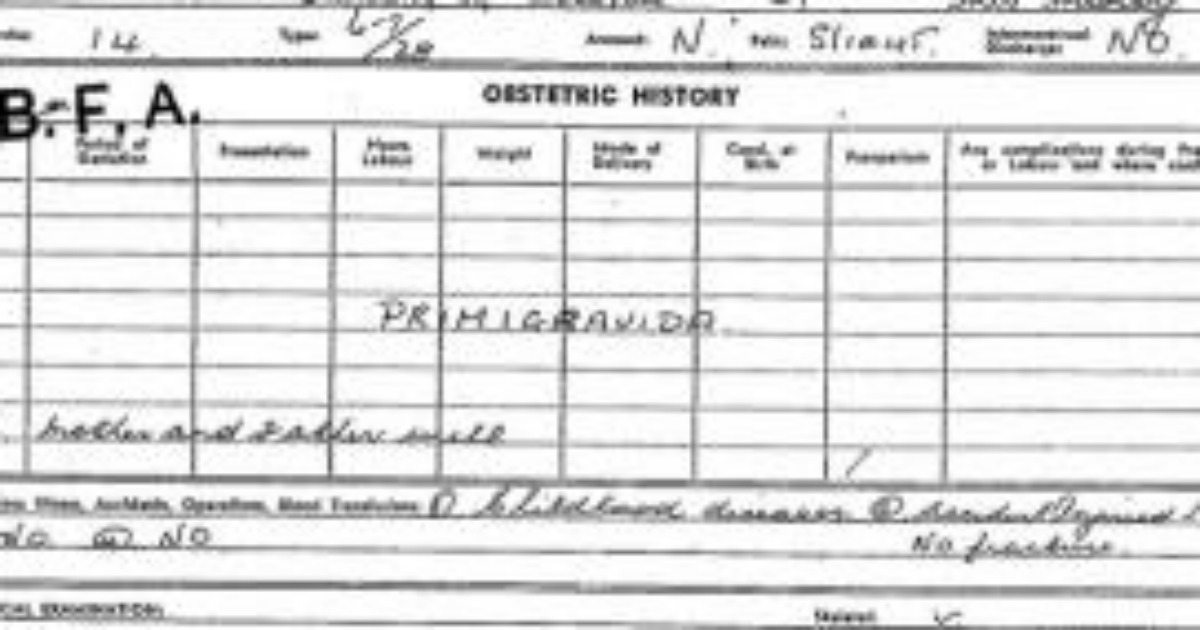
Unbeknownst to me, she marked my file with the code: BFA, ‘Baby For Adoption’, at that first meeting, whilst I was only five months pregnant. This code, as I found out in 1994, when I became involved in adoption rights activism, would guide maternity staff, months later, as to my treatment in the maternity ward. I did say that I wanted to keep my baby, as stated above, and many years later when I gained access to my social work files I saw that the social worker had written: ‘Immature little girl’. Later I would learn that being classified as ‘immature’ was a euphemism for a ‘pregnant girl/woman who wanted to keep her infant’.

One mother’s medical record stamped ‘BFA’. Source: National Archives of Australia.
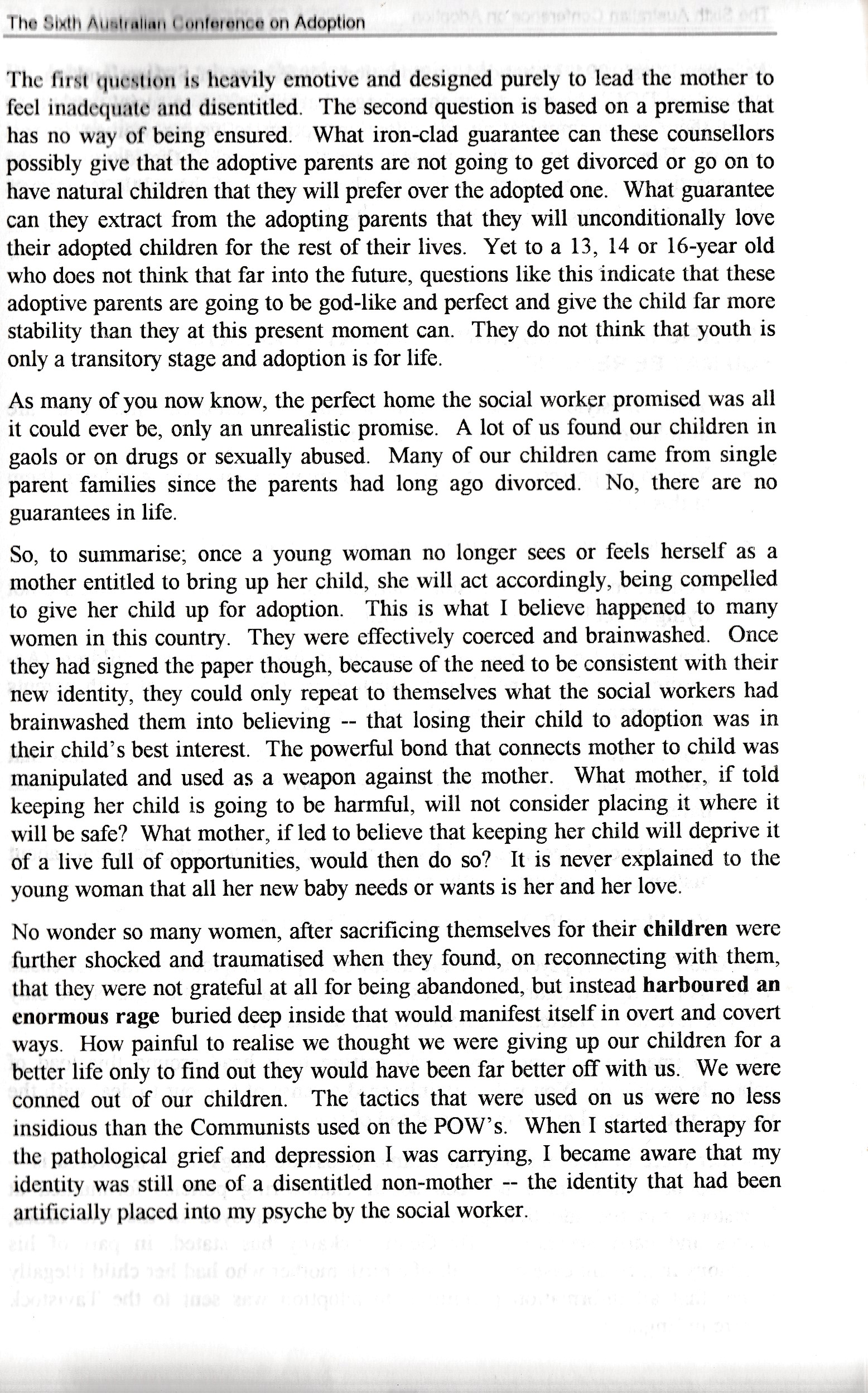
During this time I travelled by bus to Crown St. for check ups and for more visits with the social worker. The social worker continued to promote adoption and when I would argue with her, and state that I wanted to keep my baby she would ask the same questions: “Can you provide the baby with everything a two parent family can”? “Will you be able to pay all the costs to have the child educated like a two parent family can”? To which I could only reply “no”. She never referred to the baby as ‘your baby’ it was always ‘the baby’. When I would try and advance some plan on how I might keep my child she would interrupt with comments such as: “You are being very selfish”; “Keeping the baby is not in its best interests”; “There are many lovely couples who cannot have children of their own who will provide the baby with all the things you cannot”. The psychological pressure of her words, a person in a far more powerful position than I, and considering my vulnerability, age and inexperience, constituted a form of brain washing. This practice of coercive ‘counselling’ was to ensure that I did not identify as a ‘real mother’ and to engender feelings of shame, unfitness and disentitlement to rear my own child.

The Crown St. hospital. Source: National Archives of Australia.
I was admitted to the hospital ten days prior to the birth. My hospital records reveal that I was administered mind-altering barbiturates four times a day from the time of admission. None of the drugs were given for any medical reason. Neither I, nor my parents, gave permission for their administration. My confinement at the hospital was made worse by being used as a teaching specimen for male interns. I remember one incident, where a nurse came and took me to an empty ward where there was a group standing with their supervisor. The supervisor ordered me to lie down then proceeded to lift up my nightie and began to squeeze my nipples until milk flowed. He spoke about me to his students as if I wasn’t there. He then proceeded to examine my stomach explaining that I was a good example of a 34 week pregnancy, due to my size, position of the baby and the fact its head was not yet engaged.
A few days later I was ordered to go to the maternity ward. My baby was not yet ready to be born, but even so the labour was induced; the result was an extraordinarily painful birth. I was not given any information about the medical procedures that would take place. I was given an injection of Pethidine and as I began to fall unconscious, I panicked and screamed out in terror: “What is happening”? Only one doctor was in anyway considerate, trying to calm me he said: “Don’t try and fight it, just relax and go with it”. I dropped into darkness only to awake three hours later feeling as if my insides were being ripped apart. I thought I was dying. Thrashing around in excruciating pain I accidently knocked one of the nurse’s pockets. She immediately punched my arm and yelled in my face: “Don’t touch me”. Sometime during the birth a pillow was placed on my chest to block any glimpse I might have had of my newborn.
READ: “At six months pregnant, my grandmother was barbarically forced to give up her daughter.”

Once birthed, the practice at the time was to smack the baby’s bottom. I heard the smack, but there was no cry, only silence. The doctor smacked again, but still I heard nothing. I thought my baby has died. Alarmed I attempted to sit up. I cried out: “What’s wrong, what’s wrong, what’s wrong with my baby”? It was then that I became aware of the pillow and before I had a chance to see anything, I was shoved back down on the bed and held down by three nurses. The midwife at the foot of the bed yelled sharply: “This has nothing to do with you”. Then my baby was whisked away before I saw her and before I had the chance to finish the birthing process. What would haunt me for the rest of my life is the fact I never got to see my baby’s face, never got to hold or touch her, never even got to say goodbye. I had fallen into a nightmare from which there was no escape.

A crèche in a large metropolitan hospital, 1953. Source:National Archives of Australia.
I was injected with 200mg of Sodium Pentobarbital and Stilboestrol before being taken out of the maternity ward. Pentobarbital is a powerful barbiturate that interferes with the brain’s higher cognitive functioning, particularly decision making. The Stilboestrol was used to immediately dry up my breast milk. Neither my parents nor I had given permission for the hospital to administer these drugs. I had never verbally consented to adoption, nor had I signed any legal document to that effect. I was the sole legal guardian of my daughter, by virtue of her birth, and had every right to see, hold and feed her. Legally, no decision about adoption was to be given until at least five days after the birth – and that was only a prescribed minimum – not a legal requirement. I should have been able to leave the hospital with my baby without any interference. Yet the code on my file and the treatment I received in the maternity ward made it clear that taking my child for the purpose of adoption was a foregone conclusion over which I had no control.
The day after the birth, I awoke very distressed. I was taken by ambulance to an unknown location. Later I found out it was Lady Wakehurst, the hospital annex at Bondi. I never gave permission to be removed from the hospital and away from my daughter. After arriving at the annex I was drugged for the following five days. On many occasions I cried out in utter despair. I demanded, begged, implored to see my baby, to keep her, but was coldly informed that I could not. It was all too late, my baby had gone. I was told that I would not be allowed to leave the hospital, until I had signed a form consenting to adoption. Here I lay, a sixteen year old minor, alone, traumatised, assaulted and drugged. I felt such a pathetic human being – maybe it was true, I was not worthy to be a mother. Invisible. I felt myself shrinking, the world as alien and as if I was drowning in an ocean of pain and grief.
On the fifth day the welfare officer stood over me whilst I signed the form. The words ‘socially cleared’ were written on the bottom of my medical records, and it was then they told me to leave.
This story originally featured as part of Dr. Christine Cole’s PhD thesis Stolen Babies – Broken Hearts: Forced Adoption in Australia 1881-1987.
***
Dr. Christine Cole is part of Australia’s white stolen generation, which saw an estimated 150,000 babies adopted between 1950 and 1985. Cole formed Apology Alliance Australia in 2008, and spearheaded the campaign for a Senate Inquiry into the Commonwealth Contribution into Forced Adoption.
She won an Australia Human Rights Commission Award in 2013 and was nominated for Australian of the Year Award in 2012 and 2013 for her activism, and her service in achieving justice for survivors of illegal and Forced Adoption.
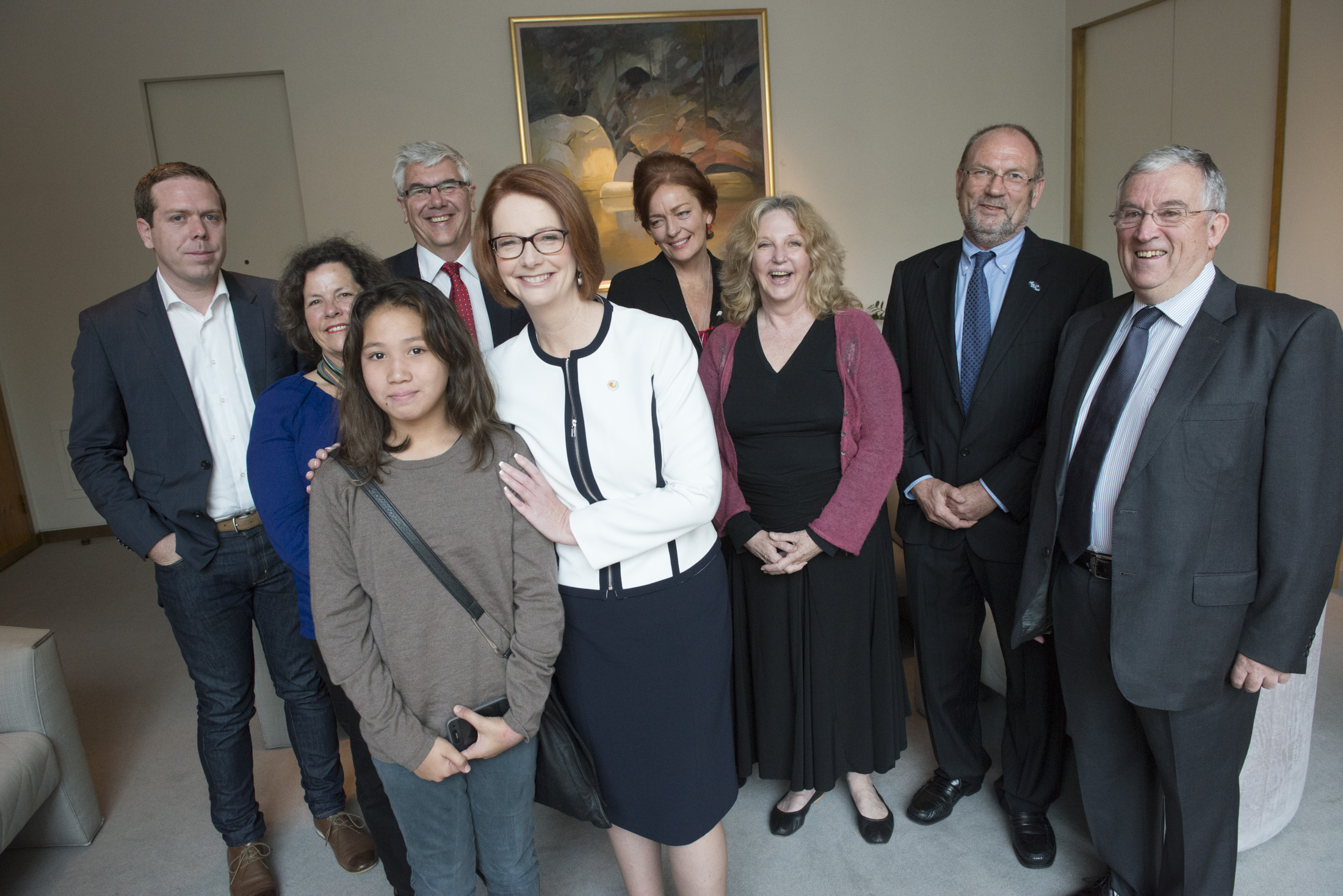
On 21 March 2013, then-Prime Minister Julia Gillard apologised on behalf of the Australian Government to people affected by forced adoption or removal policies and practices. In her speech, she said sorry to “the mothers who were denied knowledge of your rights, which meant you could not provide informed consent. You were forced to ensure the coercion and brutality of practices that were unethical, dishonest and in many cases illegal”.
“We offer this apology in the hope that it will assist your healing and in order to shine a light on a dark period of our nation’s history,” she said.


.


Posted in My Articles | Leave a comment

Stolen at Birth: The Painful Legacy of Australia’s Forced Adoption Policy

i-did-not-consent-the-painful-legacy-of-australias-forced-adoption-policy-1485823608

The institutionalized theft of babies from unwed mothers-to-be began in the aftermath of WWII, when it was considered the ideal solution to two pressing social issues: married couples unable to conceive, and the unpalatable number of single women giving birth to “illegitimate” babies.

Within minutes of giving birth in 1969 at the Crown Street Women’s Hospital in Sydney, Christine Cole’s newborn daughter was taken away from her by staff.

“I was pushed back onto the bed by three nurses. The pillow was placed back on my chest and the midwife at the end of the bed said, ‘This has got nothing to do with you,'” recalls Cole, now a prominent human-rights activist and scholar.

In the days leading up to the birth, Cole—then aged 16—had been dosed with barbiturate drugs and other sedatives and then induced into labor. Afterwards, she was given milk-drying hormones and carted off to a facility miles from the hospital to prevent any contact with her newborn.

“I had not signed any adoption consent,” she says, “this was presuming that my baby was going to be taken for adoption, irrespective of what I wanted.”

The removal of Cole’s daughter was part of a record boom in the adoption industry in Australia at the time, which saw an up to an estimated 150,000 babies adopted between 1950 and 1985.

My baby was going to be taken for adoption, irrespective of what I wanted.

Tens of thousands of these adoptions are now believed to have been non-consensual, processed under a government policy of what has come to be known as “forced adoption”—one that victims and campaigners say was a human rights abuse.

Government inquiries and independent research by scholars like Cole have recently brought to light the experiences of hundreds of single or unwed mothers-to-be during this period, who recount being routinely drugged, lied to, emotionally and physically assaulted, and coerced by authorities.

Their stories paint a dystopian picture of ongoing violations administered by government agencies and the medical establishment in line with bigoted social attitudes of the time. Like the Aboriginal and Torres Strait Islander women who over decades had their children removed by government agencies and church missions, many of these mothers consider their babies to be another “stolen generation.”

“To call it ‘forced adoption’ is really mislabeling what happened—this was an assimilation policy by the government that happened right across Australia,” says Cole, who has since completed a PhD on the subject.

“In our case we were considered inferior, second class, unfit to rear our own children because we were unmarried…. Being a single mother was purposefully pathologized.

“We were considered to have gotten pregnant because we were morally and mentally inferior—therefore, not mentally stable to bring up a child. This was full of hypocrisy because we were often farmed out [after the birth] to work as slave labour for married couples, where we were expected to clean their house and mind their children up to 80 hours a week.”


Australia’s institutionalized theft of babies began in the aftermath of the Second World War, when it was considered the ideal solution to two pressing social issues: married couples unable to conceive children of their own, and the unpalatable number of young, single women giving birth to so-called illegitimate children.

As is documented in court judgements and other official documents from the time, women such as these were considered “sexual deviants” who were “unpopular with the neighbours” and deemed “unfit” to parent. So they were denied any choice in the matter. Instead, the adoption of their babies became protocol within hospitals.

Accordingly, the child’s original birth certificate would be sealed immediately after birth and an amended one issued, establishing the child’s new identity.

These practices were also justified by social services through reference to popular psychology at the time—namely, “attachment theory” which held that a so-called clean break was best practice, with infants immediately removed from their mothers at birth. This would supposedly promote a favourable relationship between the baby and adoptive parents, while allowing single mothers to “get on with their lives.”

(In reality, however, new infants often languished in institutions for weeks or months—one Melbourne woman recounted being contacted more than two months after birth to request funding for the upkeep of her son, who had not been adopted due to disability.)

“The dehumanization of single mothers as a group allowed those working in the maternity wards to remove our baby at the birth without any empathy,” says Cole, noting that such brutal practices persisted for decades.

“In fact, some of [the maternity staff] would state that we did not attach to our babies like “normal” married mothers and therefore we were more like animals, without real feelings for our newborn.”

Read entire article:

https://broadly.vice.com/en_us/article/stolen-at-birth-the-painful-legacy-of-australias-forced-adoption-policy

Posted in My Articles | Tagged , , , , , | 2 Comments

Releasing the Past: Mothers’ Stories  of their Stolen Babies

http://www.aph.gov.au/DocumentStore.ashx?id=259f1175-0417-4e67-ab4d-802036b5968a

Posted in My Articles | 1 Comment

Australian Psychological Ass: Forced Adoption

https://www.psychology.org.au/inpsych/2016/june/forced-adoptions/


By Marguerite Hone, Project Officer, and Dr Lyn O’Grady MAPS, National Project Manager, Strategic Development and Public Interest, APS National Office

Historical context

“I will never fully heal from the grief and trauma of losing my baby the way I did…” (Mother, Kenny et al., 2012, p. 62).

During the 1940s to 1980s adoptions in Australia were at an all-time high. An estimated 9,798 adoptions took place in 1971-72 alone, standing in stark contrast to the number of current-day adoptions, totalling less than 500 per year (Quartely, Swain & Cuthbert, 2013). Adoption during this post-war era in Australia was considered the ideal solution to two prominent social issues: married couples who were unable to conceive their own children, and society’s hostile view of young single women giving birth to illegitimate children. These women were deemed by society as ‘unfit’ to parent their children (Senate Community Affairs Reference Committee (SCARC), 2012, p. 23) and were not provided with any form of alternative option. This was not an informed choice made willingly by the mothers and fathers of these newborn babies as it is today, but a practice that occurred so frequently it became protocol within hospitals and maternity homes across Australia.

Popular during this time was the pioneering work of John Bowlby on attachment theory, whose research was used to formulate key adoption and mental health policies at the time (SCARC, 2012). The ‘clean break’ theory was born and adopted nationwide as ‘best-practice’ in which infants were removed immediately from their mothers at birth, based on the premise that “favourable relationships” between adoptive parents and their new baby would have the best chances of being formed “the nearer to birth that they have him” (Bowlby, 1952, p. 53), while simultaneously granting single mothers the freedom to ‘get on with their lives’ (SCARC, 2012, p. 53). The adopted child’s original birth certificate was sealed and an amended birth certificate issued, establishing the child’s new identity.

Commonly reported experiences and their impacts

“Given away at birth, I was stripped of my innate identity, my intrinsic heritage and formally given a new name and family. I grew up with a profound sense of duality – of being part of a family and yet very much separate from them” (Adopted person, SCARC, p. 78).

The experiences of those affected are many and varied, and the ensuing impacts lifelong and often intergenerational. Mothers were ostracised from society and coerced into believing adoption was in the best interests of the child. They were bullied, lied to, and often psychologically and physically abused within hospitals and maternity homes by medical staff. Mothers have described traumatic labour experiences of being tied down to beds with sheets raised above their faces to shield their view of their baby, being drugged and having their breasts painfully bound to prevent lactation, and often never seeing their newborn or knowing anything about them (e.g., gender, health). Methods to gain consent to adoption were illegally and unethically obtained, laws were unregulated, and mothers were ill-informed about their rights and options.

Fathers were mostly viewed as ‘peripheral figures’ and excluded from all pregnancy and birth-related matters, regardless of whether or not they were in a stable and committed relationship. Under the circumstances of the time many mothers chose not to reveal the father’s paternity to authorities or the fathers themselves, with many only discovering they had a child lost to forced adoption many years later when the adopted person embarked on a search. Many who were aware of their paternity report being barred from hospitals and maternity homes, threatened, and prevented from seeing or speaking to the mother. They were rarely included on their child’s birth certificate and their desires for a family and to be involved in decisions made about their child were disregarded.

Babies were mostly adopted within six weeks of birth; however some remained in hospital nurseries for months prior to an adoption (Kenny et al., 2012). Others were placed in care at the age of four or older, or were institutionalised and deemed a ward of the State for many years before being placed with an adoptive family (SCARC, 2012). There are varied reported experiences of adopted people from being abused within institutions or within their adoptive families, to having a very loving and positive upbringing (Kenny, Higgins, Soloff & Sweid, 2012). However, many adopted people believe that being separated from their mothers at birth caused a ‘primal wound’ or trauma from which many of their current day psychological difficulties have stemmed.

The only large-scale national research study on the experiences, impacts and service needs of people affected by past forced adoption policies and practices was undertaken by the Australian Institute of Family Studies (AIFS) and published in 2012 (Kenny et al., 2012). The study highlighted a number of universally reported mental health impacts to all groups affected, including:

  • Trauma-related symptoms
  • Depression
  • Suicidal ideation and behaviour
  • Anxiety
  • Grief and loss
  • Disenfranchised grief
  • Identity issues and impacts on self-worth
  • Relationship and parenting issues
  • Substance use
  • Physical or medical illnesses

Inquiries and the Government’s response

In response to rigorous lobbying and advocacy by people affected by forced adoption, several inquiries into adoption policies and practices in Australia have been conducted since the late 1980s. Significant legislative reviews and formal parliamentary inquiries have been undertaken, leading to the most recent inquiry by the SCARC into past forced adoption policies and practices released on 29 February 2012.

Twenty recommendations were made in the Senate Inquiry report (SCARC, 2012), seven of which related to issuing statements of apology at the national and State level, as well as by non-government institutions that were involved in adoptions at the time. A National Apology was made by the former Prime Minister Julia Gillard on 21 March 2013 in the Great Hall of Parliament House, Canberra, to more than 800 people. Motions of apology were subsequently moved in both houses of Parliament and carried by Members and Senators rising in their places.

Training needs for health professionals

In 2013, the AIFS was commissioned by the then Department of Families, Housing, Community Services and Indigenous Affairs (FaHCSIA) to undertake a second study on the support service needs of those affected by forced adoption (Higgins, Kenny, Sweid & Ockenden, 2014). Service providers emphasised a general lack of awareness by health professionals of the history of forced adoption, and a lack of sensitivity to the issues being raised, resulting in the potential for harmful and re-traumatising experiences for those seeking help.

While there is no single recognised approach, researchers and practitioners have proposed the use of a ‘trauma-informed approach’ as a key overarching framework to guide and inform assessment and treatment (Higgins et al., 2014). While not requiring the disclosure of trauma, trauma-informed services are “informed about, and sensitive to, trauma-related issues” (Jennings, 2008, p. 10) and are designed to promote people’s capacity to engage and participate in treatment.

The ‘Guidance and Training on Forced Adoptions for Health Professionals’ project

In January 2015, the APS was contracted by the Australian Government Department of Health to develop a suite of professional resources and tools including national online training, a practice Guidance document, web-based resources and webinars, to better support health professionals delivering services to people affected by forced adoption. The project forms part of the government’s response to the Senate Inquiry’s key recommendations.

The national online training program entitled “Understanding and supporting people affected by forced adoption: Training for health professionals” has been developed to meet the needs of a range of allied health professionals and comprises three courses, two of which are relevant for psychologists:

  1. A brief introduction to understanding past forced adoption policies and practices (1 hr)
    Suitable for all health professionals who wish to gain general knowledge, but who aren’t currently working or planning to work with people affected by forced adoption.
  2. Working with people affected by forced adoption: Training for mental health professionals (9hrs)
    Suitable for mental health professionals who are currently working or planning to work with people affected by forced adoption.

The first author can be contacted at M.Hone@psychology.org.au

References

  • Bowlby, J. (1952). Maternal care and mental health: A report prepared on behalf of the World Health Organization as a contribution to the United Nations programme for the welfare of homeless children. Geneva: World Health Organization.
  • Higgins, D., Kenny, P., Sweid, R., & Ockenden, L. (2014). Forced adoption support services scoping study. Retrieved from http://www.dss.gov.au/sites/default/files/documents/06_2014/final_scoping_study_report_2_3_2.pdf
  • Jennings, A. (2008). Models for developing trauma-informed behavioral health systems and trauma-specific services: 2008 update. Alexandria, VA: Center for Mental Health Services, National Center for Trauma Informed Care.
  • Kenny, P., Higgins, D., Soloff, C., & Sweid, R. (2012). Past adoption experiences: National Research Study on the Service Response to Past Adoption Practices (Research Report No. 21). Melbourne, Australia.
  • Quartely, M., Swain, S., & Cuthbert, D. (2013). The market in babies: Stories of Australian adoption. Melbourne, Australia: Monash University Publishing.
  • Senate Community Affairs References Committee (SCARC). (2012). Commonwealth contribution to former forced adoption policies and practices. Canberra, Australia.

To sign up for the training or to find out more about the APS Forced Adoption Project.

Posted in My Articles | Leave a comment