Salvation Army using Dr. Jeremy Sammut’s research to promote forced adoption?

http://www.sarmy.org.au/en/Social/eConnect/Policy/Childrens-housing-and-child-protection-failure/

“Unless the emphasis on family preservation is reversed in the children’s best interests, and greater use is made of adoption to give children safe and stable homes, governments will be forced to spend increasing sums on OOHC to cater to the high needs of increasing numbers of damaged, disturbed and distressed children and young people…the rising size, cost, and complexity of the out-of-home care system in Australia is directly linked to child protection failures. Children are entering care later and more damaged, and are spending longer in care due to the misguided emphasis placed on family preservation by child welfare agencies.’

Dr. Naomi Perry in her thesis describes how matrons of Salvation Homes in Tasmania (the references are in my thesis linked to this blog) were able to dispense with unwed mothers’ consents under the Mental Deficiency Act 1920 (Tas.) and forcibly take their newborns and place them with married couples for adoption.  Therefore it would seem  the Salvation Army has a long history with Forced Adoption in Australia – is this the phenomenon the Salvation Army and Dr. Jeremy Sammut are suggesting we revisit?

Posted in My Articles | Leave a comment

Academic Paper condemns Forced Adoption & exposes serious damage

Everyone who has had their family torn apart by the government’s past or present policy of removal practices should read the following article. It is is authored by Dr. Daryl Higgins – who co-authored the AIFS research project report with Pauline Kenny.  The Report exposed the shocking trauma that many mothers and their taken children, now adults suffer.  It is one of the only studies in the world to look at the long term damage adoption inflicts because of the separation of mothers from their children.  It also acknowledges that damage is not quarantined to mothers and their stolen children but has a ripple effect that continues to casue damage down through the subsequent generations.

The following article featured in the August edition of InPsych highlights many of the issues I raised in my PhD and in many of the articles I have written on the topic of Forced Adoption.

http://www.psychology.org.au/inpsych/2014/august/higgins/

Past Adoption Practices: Implications for current interventions

By Dr Daryl Higgins MAPS, Deputy Director (Research), Australian Institute of Family Studies

During the mid to late twentieth century (1940s to 1980s), it was common practice for babies of unwed mothers to be adopted by married couples. Many of the infants were taken from their mothers at childbirth as a result of extreme pressure and coercion that they experienced from family, social workers and hospital staff. The practices sometimes extended to ‘undeserving’ married women. The adoptions that occurred in this way have been termed ‘forced adoptions’. Not all of the forced removals or separations between parents and children resulted in adoption; some children grew up in institutions. It has now been recognised that the separation of a child from its mother in this manner was neither moral nor legal (Gillard, 2013) – a practice for which the nation has offered its apology (Mushin, 2014). Many of the practices have similarities with those to which Indigenous children of the Stolen Generations were subjected, with children forcibly removed from their families under acts of parliament and sent either to institutions or adopted by non-Indigenous families (see article Dark chapters in Australian history: Adopted children from the Stolen Generations for discussion of this aspect of forced adoption practices in Australia).

The past practices of forced adoption have resulted in life-long consequences for the majority of those directly involved, particularly for mothers and adopted persons, but also for other family members (Higgins, 2010). This article distils recent research conducted by the Australian Institute of Family Studies (AIFS)1  and discusses the implications for service delivery, particularly psychological practice.

Investigating the past

Although there is a wealth of primary material, there has been little systematic research on the experience of past adoption practices in Australia. In recent years, research in the area of past adoption practices, including forced adoptions in Australia, has become a key area of focus for the AIFS. Three seminal pieces of work have been undertaken since 2010: a review of the literature, looking at the effects of past adoption practices (Higgins, 2010); the National Research Study on the Service Response to Past Adoption Experiences (Kenny et al., 2012), which examined the effects of forced adoptions, including the psychological, emotional and social impacts; and the Forced Adoption Support Services Scoping Study (Higgins et al., 2014), which focused on the ways in which service providers – such as psychologists – can most appropriately respond to the current needs of people affected by forced adoption practices including the need for information, counselling and reunion services.

Forced adoption experiences

In 2012 the AIFS completed the National Research Study on the Service Response to Past Adoption Practices, which examined past adoption experiences to inform development of best practice models or practice guidelines for the delivery of supports and services for individuals affected by their adoption experiences (for details of the study, seeaifs.gov.au/institute/pubs/resreport21/index.html). More than 1,500 individuals took part in the study, comprising: 823 adopted persons; 505 mothers; 94 adoptive parents; 94 other family members; 12 fathers; and 58 service providers.

Some of the disturbing adoption-related experiences reported by study participants included:

  • Mothers being used for the training of medical students
  • Mothers being sexually assaulted by medical professionals
  • Mothers experiencing medical neglect or maltreatment
  • Mothers being tied to beds, forcibly held down, having pillows placed over their faces and having sheets held up to shield the view of their newborn son/daughter during labour
  • Mothers being administered drugs that caused impaired judgement/capacity to make informed decisions
  • Mothers and fathers being informed that their newborn son/daughter was deceased when they were not
  • The unethical and illegal obtaining of consent to adopt (or no consent obtained at all)
  • Adoptees as babies being used for medical experimentations
  • Adoptees being placed with abusive adoptive parents
  • Adoptees being lied to regarding the circumstances surrounding their adoption, including the obtaining of consent from their parents
  • Fathers being excluded from information and decisions about the care of children.

Findings from this study again highlighted the long-lasting effects on not only mothers and fathers separated from a child by adoption, but also on the now adult children who were adopted as babies. The most common impacts of forced adoption were found to be psychological and emotional, and included mood disorders, grief and loss, PTSD, identity and attachment disorders, and personality disorders.

The study found a range of poor mental health and wellbeing outcomes. Mothers had a higher than average likelihood of suffering from a mental health disorder, with close to a third showing a likelihood of having a severe mental disorder at the time of survey completion, and over half having symptoms that indicated the likelihood of having posttraumatic stress disorder. Around 70 per cent of adopted individuals agreed that being adopted had a negative effect on their health, behaviour and/or wellbeing while growing up, regardless of whether the experience with their adoptive families was positive or negative. Of the few fathers who participated (n = 12), a third had poor mental health and almost all participants showed some symptoms of PTSD (64% had severe PTSD symptoms).

One of the strongest messages communicated in this study was that these experiences had left many feeling they were the victims of a systematic approach to the removal of babies from the ‘undeserving’ (usually unmarried young women) to the care of the ‘deserving’ (married infertile couples). Many participants expressed sentiments to the effect that those who experience past adoption practices are now the living result of a failed social experiment. It is clear that the impacts of past adoption policies and practices are a very current issue for many thousands of Australians. While there were divergent views within specific respondent groups as to how their current needs would be best met, commonly identified priority actions for responding to the needs of those affected included: recognition of past practices (including the role of apologies and financial resources to address current service and support needs); community awareness of, and education about, past adoption practices and their subsequent effects; specialised workforce training and development for mental health carers, mental and broader health and welfare professionals; improvements to services for helping search/make contact with family; addressing accessibility and cost of mental, behavioural and physical health services; and ensuring that lessons from the past are learned from and translated where appropriate into current child welfare policies – particularly in relation to current adoption services.

Support service needs of people affected by forced adoption

In 2012, the AIFS undertook the Forced Adoption Support Services Scoping Study with the aim of developing service models to enhance and complement the existing service system for people affected by forced adoption policies and practices (for details of the study seewww.dss.gov.au/our-responsibilities/families-and-children/publications-articles/forced-adoption-support-services-scoping-study).

The research identified gaps in the adequacy of treatment within adoption-specific services as well as more broadly. There is a complexity of reasons as to this inadequacy, including a general lack of awareness by professionals of the history of forced adoption, and lack of sensitivity in raising issues, or responding when clients talk about their history.

Although there is a limited amount of empirical data regarding the impacts of forced adoption, what exists has largely focused on the grief and loss experienced by the mothers and adopted individuals. However, there is an increasing acceptance that the forced adoption experiences of many mothers and fathers has resulted in similar stress responses typically associated with those who have been exposed to trauma, such as depression, anxiety and PTSD. Further, some adopted persons are also experiencing similar stress responses, either as a result of their adoption experiences or because of childhood abuse or neglect growing up (Kenny et al., 2012).

Grief and loss. The very nature of adoption is centred on the concept of loss. Mothers, fathers, adopted persons, extended family members and adoptive parents all experience loss through adoption. Further, individuals who do not undertake the normal grieving process are susceptible to pathological grief – the result of an abnormally prolonged grieving process that has maladaptive impacts (Bloch & Singh, 2010). Mothers subjected to forced removal policies and practices are at risk of experiencing pathological grief. Disenfranchised grief can occur when a relationship is not recognised, the loss is not acknowledged and there is an absence of socially recognised rituals for mourning the loss (Robinson, 2002).

Anxiety. It is evident that adopted persons, mothers and some fathers affected by forced adoption have, or are continuing to experience, symptoms associated with panic disorder, generalised anxiety and other anxiety disorders (Kenny et al., 2012; Senate Inquiry, 2012). Anxiety symptoms and disorders are common responses among people who have been exposed to trauma (Briere & Scott, 2013).

Trauma. The value of a ‘trauma-informed’ or ‘trauma-aware’ approach to service delivery is becoming more recognised when working therapeutically with people who have experienced significant events that affect a person’s sense of self (Wall & Quadara, 2014). This includes people affected by forced adoption and who are separated from family – particularly mothers. Best practice suggests that service providers should approach all clients as if they might be trauma survivors. Integrated, trauma-informed services provide a safe and supportive environment that protects against physical harm and retraumatisation. They are based on an understanding of clients and their symptoms in relation to their overall life background, experiences and culture. Service providers need to collaborate with clients throughout all stages of service delivery and treatment. Services are based on an understanding of the symptoms and survival responses required to cope, and seeing trauma as a fundamental experience that influences an individual’s identity rather than a single discrete event.

Some dos and don’ts when working with people affected by forced adoption
  • Don’t talk about ‘relinquishment’ – most mothers from the period of closed adoption did not freely choose to have their baby adopted; a range of coercive and illegal practices occurred.
  • Don’t assume that trying to establish a relationship with family is a simple solution (and for many, it is seen as making contact, rather than having a ‘re-union’, when there was no opportunity to bond or have a union as a mother-child dyad in the first place).
  • Do provide encouragement for clients to seek support from others who have had similar experiences (a fairly comprehensive list of services, including peer-support agencies and groups in each State/Territory are listed in Higgins et al., 2014).
  • Do understand that for many adopted persons, there are ‘divided loyalties’ or mixed feelings, with loyalty and gratitude to the adoptive family for many, but at the same time, the capacity to be hurt, disappointed, or angry – or simply curious about their biological origins and broader family connections.
  • Don’t assume a typical reaction to events from the period of forced adoption: some mothers are highly traumatised, grieving and angry at the injustice of past events; others are resilient, and coping well, but may still welcome assistance working through emotional reactions to current ‘triggers’, or new challenges in life where past events continue to reverberate.
  • Do support clients to address difficulties in forming and maintaining positive relationships with others, including partners, parents and children.
  • Do explore how your agency, or even your own private practice, can undertake activities that draw on the principles of restorative justice (see Higgins et al., 2014, pp. 40-45).

Implications for current policy and service delivery

One of the clearest implications from the AIFS research was that participants wanted lessons from past practice to translate into current policy and practice areas. But given adoptions have dropped from their peak of almost 10,000 in the early 1970s to 339 last year (Kenny & Higgins 2014), what are the touch-points for current policy and practice?

Psychologists providing advice and support in relation to a range of other adoption-related areas must ensure they do not risk continuing the mistakes from the past: cutting ties between biological parents and their children; failing to provide young people with information about their heritage, culture and family; prioritising the desires of prospective parents to have a family over the needs of existing (and often vulnerable) parents and children; recognising that family ties are for life; and that the trauma of interrupting the bond between parents and children can have lasting effects for all.

Research participants identified areas of current practice where these practices may continue to occur, such as: child protection and out-of-home care (including permanency practices); current adoption practices (including overseas adoption; local adoption; moves to increase adoption from out-of-home care); surrogacy; and donor insemination. The AIFS has recently published a collection of essays that address each of these topics and confirm the views of the research participants: that there are plenty of opportunities to apply the lessons from past mistakes to our current social policies and everyday professional practices (Hayes & Higgins, 2014). Lessons from the past need to be brought to bear on current child welfare practice issues, as per the examples identified below.

Managing contact with biological family members. The available evidence supports the importance of biological connections, and how these need to be supported and sustained, even in challenging circumstances such as child protection cases. Case managers have described the value of shared training and supports for professionals working with people affected by past adoption alongside workers managing out-of-home care placements and current adoptions – so that they value all family connections and are sensitised to the ways in which practices can cause long-term harm (Higgins et al., 2014).

Examining new trends in family formation. One of the strongest themes from participants in AIFS research was how lessons need to be applied to emerging family formation mechanisms, such as donor insemination and surrogacy (Higgins et al., 2014; Kenny et al., 2012). Cuthbert and Fronek (2014) concluded that “commercial offshore surrogacy represents the latest source of children in a shifting market driven by the needs of adults seeking children for family formation. This market is enabled by new technologies, underwritten by old inequalities and repeats patterns…” (p. 63).

Increasing the stability of placement. Cashmore (2014) questioned whether we have fully explored the potential of alternative practices like shared family care or ‘mirror family’ arrangements, where ‘families’ are fostered, rather than children fostered or adopted, to enhance stability and wellbeing for children who have been abused and taken into care.

Ensuring ‘open adoption’ is truly open. Castle (2014) reflected that court-ordered open adoption does not necessarily secure contact between parents and children who have been voluntarily adopted. She questioned the limits of the law to be able to achieve what she sees as necessary for true openness: namely,
a commitment to shared parental responsibility between parents and adoptive parents.

Questioning the future of adoption per se. The lessons learnt from past practice require reflection on the future of adoption. Mushin (2014) concluded that “the vast majority of people affected by forced adoption would like to see the total abolition of adoption… It cannot be in a child’s best interests to have all aspects of his or her past obliterated from the record” (p. 45).

What does this mean for psychologists in practice?

There is a range of functions that can be provided by counselling and mental health care services for those affected by forced adoptions. At a minimum, practitioners should ensure that the services they provide are trauma-informed, aware of grief and loss, and are attuned to attachment disruption issues. Concrete steps to reduce the risk of retraumatising clients can include:

  • Reading about the history of adoption and its impacts to provide contextual background
  • Undertaking thorough assessment and screening processes to establish an appropriate treatment plan, tailored to meet individual needs and circumstances
  • Referring clients for trauma-specific services (for example, trauma-focused psychotherapy interventions) where trauma is not the practitioner’s own area of expertise
  • Engaging with clients in a manner that is understanding and non-judgemental of the needs and necessary coping behaviours that were required of the trauma survivor to function in everyday life.

The diverse needs of people affected by forced adoptions frequently require expertise from other services/professionals and practitioners should facilitate access to such services where necessary. Services need to be attuned to the complex symptoms, needs and responses of all those directly affected, and to provide flexible and individually focused care (including intensive and ongoing psychological and psychiatric counselling) across a range of health domains (including mental and physical health, and relationship, social and economic wellbeing).

Conclusion

Many of those affected by forced adoption policies and practices continue to struggle with ongoing mental, physical and social health problems as a result of their adoption experiences. There is now evidence of the wide-ranging psychological impacts, including complex and/or pathological grief and loss, self-identity and attachment issues, anxiety and depression disorders, and symptoms of posttraumatic stress disorder. With careful consideration of the Australian research, as well as attention to learning the lessons from past damaging practices, psychologists can appropriately respond to the current needs of those affected by past adoption and removal practices.

Researcher reflection on a knowledge translation session with psychologists

By Pauline Kenny, Research Fellow, Australian Institute of Family Studies

The research undertaken by the AIFS has identified a need for making better use of both our existing knowledge in relation to the effects of forced adoption, as well as the feedback from affected individuals about the improvements to service delivery that they want to see occur. However, it is increasingly recognised that the provision of information in and of itself (simple dissemination) is inadequate in supporting the translation of research into practice, i.e., improving the quality of services available to those affected by forced adoption. In view of this, we have undertaken a number of direct engagement activities with service professionals in order to provide a more meaningful platform for this knowledge translation.

In April 2014, I was fortunate enough to be invited to speak to members of the APS ACT Branch regarding the findings of the AIFS research and the implications for therapeutic practice. As I commenced my presentation, there were a number of things that became apparent very quickly:

  • Few people in attendance were aware of the fact that a National Apology had been given by Julia Gillard in March 2013 for the Commonwealth’s contribution to former forced adoption and removal policies and practices.
  • There was a very obvious level of interest in the subject matter.
  • There was a very obvious level of disbelief and concern displayed by attendees upon hearing the details of what had happened to so many individuals throughout Australia in our relatively recent history.

The intention of the professional development session was to focus on what we know from the research about the impacts of forced adoption and the mental health issues that are often present in many affected individuals, in order for mental health professionals to more appropriately respond to their clients’ needs. However, there was an additional powerful outcome judging from the response from this group of psychologists, which also affirmed the importance for those of us who undertook the research to ‘tell the story’.

The importance of a meaningful exchange of information that enables interaction, discussion and reflection was truly apparent in this setting. Through adopting an engaged approach to disseminating the findings of our research, what began as a 2-hour continuing professional development activity transpired into a lot more for some of the practitioners who attended. The ‘light bulb’ moments that were shared with me privately regarding current and past clients who ‘ticked’ many of the boxes in terms of presenting symptomology is just one example of the benefit in researchers not just presenting the facts and figures, but providing a context and space for reflection, case review and analysis in a group context around a specific topic.

One of the main findings in the AIFS 2012 National Study was that participants wanted greater public awareness and understanding of their experiences, so that what they went through never happens again. From a researcher’s viewpoint, it is a privileged position to meet with strangers who are willing to share their often-harrowing life experiences in order to contribute to our knowledge base. Participants were willing to expose themselves to the understandably difficult task of disclosing very distressing and personal information if it meant that there was the chance that it would make a difference to the quality of support that was currently available to them and others.


The author can be contacted at Daryl.Higgins@aifs.gov.au

References

  • Bloch, S., & Singh, B. (2010). Foundations of clinical psychiatry (3rd ed.). Carlton: Melbourne University
  • Briere, J. N., & Scott, C. (2013). Principles of trauma therapy: a guide to symptoms, evaluation and treatment (2nd edn. ed.). California: SAGE Publications, Inc.
  • Cashmore, J. (2014). Children in the out-of-home care system. In A. Hayes, & D. Higgins (Eds.), Families, policy and the law: Selected essays on contemporary issues for Australia, pp. 143-150. Melbourne: Australian Institute of Family Studies. Available at:aifs.gov.au/institute/pubs/fpl/fpl15.html
  • Cuthbert, D. & Fronek, P. (2014). Perfecting adoption? Reflections on the rise of commercial offshore surrogacy and family formation in Australia. In A. Hayes, & D. Higgins (Eds.), Families, policy and the law: Selected essays on contemporary issues for Australia, pp. 55-66. Melbourne: Australian Institute of Family Studies. Available at:aifs.gov.au/institute/pubs/fpl/fpl7.html
  • Gillard, J. (21 March 2013). National Apology for Forced Adoptions. Retrieved fromag.gov.au/About/ForcedAdoptionsApology/Documents/Nationalapologyforforcedadoptions.PDF
  • Hayes, A., & Higgins, D. (Eds.) (2014). Families, policy and the law: Selected essays on contemporary issues for Australia. Melbourne: Australian Institute of Family Studies. Available at:aifs.gov.au/institute/pubs/fpl/index.html
  • Higgins, D. J. (2010). Impact of past adoption practices: Summary of key issues from Australian research. Australian Journal of Adoption, 2(2). Available at:nla.gov.au/openpublish/index.php/aja/issue/view/142/showToc
  • Higgins, D. J. (2012). Past and present Adoptions in Australia: Facts sheet. Melbourne: Australian Institute of Family Studies. Available at:aifs.gov.au/institute/pubs/factssheets/2012/fs201202/fs201202.html
  • Higgins, D., Kenny, P., Sweid, R., & Ockenden, L. (2014). Forced Adoption Support Services Scoping Study: Report for the Department of Social Services by the Australian Institute of Family Studies. Melbourne: Australian Institute of Family Studies. Available at:dss.gov.au/our-responsibilities/families-and-children/publications-articles/forced-adoption-support-services-scoping-study.
  • Kenny, P., & Higgins, D. (2014). Past adoption practices: Key messages for service delivery responses and current policies. In A. Hayes, & D. Higgins (Eds.), Families, policy and the law: Selected essays on contemporary issues for Australia, pp. 29-38. Melbourne: Australian Institute of Family Studies. Available at:aifs.gov.au/institute/pubs/fpl/fpl4.html
  • Kenny, P., Higgins, D., Soloff, C., & Sweid, R. (2012). Past adoption experiences: National Research Study on the Service Response to Past Adoption Practices (Research Report No. 21). Melbourne: Australian Institute of Family Studies. Available at:aifs.gov.au/institute/pubs/resreport21
  • Mushin, N. (2014). The forced adoption apology: Righting wrongs of a dark past. In A. Hayes, & D. Higgins (Eds.), Families, policy and the law: Selected essays on contemporary issues for Australia, pp. 39-46. Melbourne: Australian Institute of Family Studies. Available at:aifs.gov.au/institute/pubs/fpl/fpl5.html
  • Robinson, E. (2002). Post-adoption grief counselling. Adoption and Fostering, 26(2), 57–63.
  • Senate Community Affairs References Committee (2012). Commonwealth contribution to former forced adoption policies and practices. Canberra: Senate Community Affairs References Committee. Retrieved from: http://www.aph.gov.au/Parliamentary_Business/Committees/Senate_Committees?url=clac_ctte/comm_contrib_former_forced_adoption/report/index.htm
  • Wall, L., & Quadara, A. (2014). Acknowledging complexity in the impacts of sexual victimisation trauma. ACSSA Issues No. 14, 2014.
Melbourne: Australian Institute of Family Studies. Available at:aifs.gov.au/acssa/pubs/issue/i16/index.html


Posted in My Articles | Tagged , , , , , , , , , , | Leave a comment

Hansard Transcript from Legislative Council- 11 September 2014: Motion for Day of Recognition & Memorial

Hansard Transcript from Legislative Council- 11 September 2014

BUSINESS OF THE HOUSE

Suspension of Standing and Sessional Orders: Order of Business

Ms JAN BARHAM [10.32 a.m.]: I move:

That standing and sessional orders be suspended to allow a motion to be moved forthwith that Private Members’ Business item No. 1391 outside the Order of Precedence, relating to forced adoption practices, be called on forthwith.

This matter deserves urgency. It is only nine days away from the two-year anniversary of the apology in this place. People affected by forced adoption practices are seeking clarity about the Parliament’s support for the future redress and recognition of this wrongdoing.

Question—That the motion be agreed to—put and resolved in the affirmative.

Motion agreed to.

Order of Business

Motion by the Hon. Jan Barham agreed to:

That Private Members’ Business item No. 1391 outside the Order of Precedence be called on forthwith.

FORCED ADOPTION PRACTICES

Debate resumed from 24 October 2013.

The Hon. PAUL GREEN [10.34 a.m.]: I continue my contribution to debate on this issue. In a report titled “Past and present adoptions in Australia” the Deputy Director of Research at the Australian Institute of Family Studies, Dr Daryl Higgins, stated:

From the 1920s, adoption practice in Australia reflected the concept of secrecy and the ideal of having a “clean break” from the birth parents. Closed adoption is where an adopted child’s original birth certificate is sealed forever and an amended birth certificate issued that establishes the child’s new identity and relationship with their adoptive family. Legislative changes in the 1960s tightened these secrecy provisions, ensuring that neither party saw each others’ names.

The experience of closed adoption included people being subjected to unauthorised separation from their child, which then resulted in what was often called “forced adoption”. From the 1940s, adoption advocates saw it as desirable to relinquish the child as soon as possible, preferably straight after birth.

From the 1970s, advocacy led to legislative reforms that overturned the blanket of secrecy surrounding adoption, though until further changes were made in the 1980s (or 1990s in some Australian jurisdictions), information on birth parents was not made available to adopted children/adults.

Beginning with NSW in 1976, registers were established for both birth parents and adopted children who wished to make contact. In 1984, Victoria implemented legislation granting adopted persons over the age of 18 the right to access their birth certificate (subject to mandatory counselling). Similar changes followed in other states (e.g., NSW introduced the Adoption Information Act in 1990).

Reunion services are now part of the ways in which governments and agencie are trying to address the negative impacts of separation on (birth) parents and children from these past adoption practices.


Under the heading “Impact of past adoption experiences”, Dr Higgins continued:

There is limited research available in Australia on the issue of adoption practices during and following the period of closed adoption in Australia. The available information highlights a number of important issues:

There was a range of people involved, and therefore the impacts and “ripple effects” of adoption reach beyond mothers and the children who were adopted, to include fathers, spouses and other family members.

One issue of particular importance is the trauma of the separation of mother and child, and the resulting experience of grief and loss. Mothers—particularly those who have not had any contact—continue to be traumatised by the thought that their child grew up thinking that they were not wanted:

  • An adoptee, after meeting her mother late in life, said of her: “There has hardly been a day in her life that she hasn’t wondered where I was or had (I) ever survived” (cited by Swain & Swain, 1992, p.47).


  • In the words of one mother: “It wasn’t the children who were not wanted. Mothers weren’t wanted because they were unmarried” …


There is anecdotal evidence of variability in adoption practices, ranging from women feeling that they were supported in making an informed decision, to reports of unjust, cruel and unlawful behaviours towards young unmarried pregnant women who were giving birth.

Past adoption practices continue to affect the daily lives of many people, including the process of reunion between birth parents and adoptees … and the degree to which reunion is seen as a “success” or not.

From these identified issues, it is evident that there is a need for better information, counselling and support for those affected by past adoption practices. Additionally, more research is needed about the current views of adoptive families and their experiences of closed adoption, as well as the experiences of adoptees (including their perspectives on reunion and their experiences of reunion services).

I note that when speaking to this motion Reverend the Hon. Fred Nile said:

Paragraph (2) of the motion states:

That this House acknowledges that offering apologies for an injustice is an essential step toward reconciliation and reparation, but that apology must be followed by ongoing efforts to recognise the harms caused and to provide support to those affected.


Reverend the Hon. Fred Nile also said:


It is one thing for the House to pass motions of apology or regret, but there also need to be actions to show the individuals who were forced to go through forced adoption—the mothers and children—that the House has gone further than simply rhetoric.

I wholeheartedly endorse the words of Reverend the Hon. Fred Nile. I note that Ms Jan Barham recommends that the State take other steps to address this matter, such as, a day of recognition of the outcomes of the practice or the establishment of a place in Sydney where people can grieve or pay their respects, which will assist them in the healing process. I commend Ms Jan Barham for her efforts in this regard and her compassionate approach to this matter. The Christian Democratic Party supports her motion 100 per cent. Minister Upton has been very attentive to these issues and I am sure that in due course she will have the dubious honour of being able to appropriately address this matter.


The Hon. LYNDA VOLTZ [10.41 a.m.]: I support the motion moved by Ms Jan Barham and the principles that are held within it. The Federal Parliament apologised to mothers who were subjected to forced adoptions. Julia Gillard delivered a moving apology to those women and Barry O’Farrell as Premier of New South Wales also made an apology. Having attended school in Western Sydney in the 1960s through to the 1970s, I am acutely aware of the attitudes and practices of society at the time. It was fortuitous that there was a great enlightenment during the 1960s, when medical science moved ahead, which prevented many women who lived in suburban Australia from being treated so badly.

During my time at Birrong Girls High School, I knew of girls at the school who during the holiday breaks would spend their time in Minda, a juvenile detention centre. At the time children who were considered abandoned were not fostered by families but were kept in these facilities. Some girls I went to school with had their babies taken away from them and they were given little choice about what would happen to their child. I grew up in an area where religion did not play a major role, but probably the dominant religion in Birrong was Catholicism. I started off at a Catholic school in Sefton until the age of six, when my father became wary of some of the practices at that school and enrolled me at the local public school.

As children, we were forced to go to confession on a Friday night and to church religiously on Sunday. I distinctly recall attending confession as a young child and confessing to the priest, “Forgive me

Father for I have sinned.” Then I pointed out to the priest, “Actually, Father, I haven’t done anything wrong this week.” Of course, I was told to recite two “Hail Marys” and an “Our Father” for lying to the priest because the idea of original sin was very acute. We were taught from a very young age that no matter what we did we were sinners.


The Hon. Marie Ficarra: He was probably right, though, Linda.


The Hon. LYNDA VOLTZ: He wasn’t right at all. But that is the doctrine that was taught to us at school. The Hon. Helen Westwood, who is in the Chamber, probably had similar experiences at the Catholic school at Sefton, which she also attended. The attitude was that we were not good children or good people and, basically, if they beat us enough they would be able to beat it out of us. It is not surprising then that women had their children taken away from them because they had committed a gross sin; they were an embarrassment to society and their children should be taken from them; they should be prohibited from leading a happy life. The apology by our governments was very important. The treatment of women during the 1960s and 1970s in Western Sydney and country areas was appalling and it is difficult for me to believe that it happened in my lifetime. The world is a much better place now that the practice does not occur.


The Hon. ROBERT BROWN [10.45 a.m.]: I also was raised as a strict Catholic but I cannot comment on what it was like to be a girl growing up at that time. Members of this House well know that The Greens and the Shooters and Fishers Party seldom agree on anything but the motion moved by Ms Jan Barham makes me feel proud to be a parliamentarian. The Shooters and Fishers Party supports the motion.

The Hon. HELEN WESTWOOD [10.46 a.m.]: I too support the motion moved by Ms Jan Barham. I particularly acknowledge her deep commitment to this very serious social issue, which has had a sad history in our country and is a painful legacy for the many people who have been affected by forced adoptions. From the time Ms Jan Barham became a member of this House, and probably well before that, she has shown great concern that those affected by forced adoption be supported. I hope that the activities that she has been involved in will lessen the pain that many people have experienced.


As other members have noted, as a society we have come a long way on the issue of single parenthood and particularly in our attitude towards sex and sex education. The history of forced adoptions is that it was overwhelmingly young women who bore the emotional, physical and psychological costs of forced adoptions; it often led to a lifetime of pain. These young women, who did not have the means to support themselves, would be sent away so that they did not bring shame upon their community, family and friends. Only those closest to them knew of their circumstances. They would remain there during their pregnancy and to give birth.

After they gave birth, their babies were taken away from them, for the rest of their life. Often, they did not have the opportunity to hold or smell their babies. I can only imagine how painful that would have been. I know women who lost their babies as a result of the practice of forced adoption and I know that the pain has stayed with them for the rest of their lives. They still hurt today. For many, the pregnancy was a result of sex they did not want. Of course, the men who fathered those children generally faced no repercussions; their lives went on as though nothing had happened.

I also know of couples who were expecting a child before they were married and were forced by their families to adopt their child out. Later those couples married and had more children. Every year on the birthday of their first child or as they watched their children within the marriage grow up and mature, they experienced the loss of their first child and they felt that their family was never complete. They lost their first child because of the attitudes of society towards sex and sex outside marriage.

I am delighted to have lived long enough to see our attitudes towards sex and birth change so much. Now the birth of a baby is cause for celebration, regardless of the marital status of the mother and the father or, as the case may be, two mums or two dads. I am delighted to have lived through that change. The practices and policies that led to forced adoption caused a great deal of pain for many in our community and continue to cause pain for both the adopted children and the women who had to give up their babies. Many never got to know their babies and have spent their lives wondering about the little ones they gave birth to.

Every time I think about those women being forced to leave families and loved ones, being sent away to give birth alone in a strange place amongst strangers and then having their babies removed from them, it fills me with deep pain. I am so glad that I was fortunate enough not to have lived through that experience. I strongly believe that anything we can do as a society, as a government and as legislators to alleviate some of that pain and bring some justice to these women and the children who have now grown into men and women without knowing their families, as well as the dads who had to give up their children, will make us all the better for it. Again I commend Ms Jan Barham for moving the motion and I am pleased to support it.


The Hon. MELINDA PAVEY (Parliamentary Secretary) [10.52 a.m.]: I join my colleagues in this Chamber in congratulating Ms Jan Barham on moving the motion, which I welcome. The stories I have just heard are stories that I have lived and breathed with family and friends I grew up with who were adopted. I am pleased that those friends, who are now in their thirties and forties, have reconnected with their birth mothers. Although I am not sure whether they were forced adoptions or adoptions, a reconnection has taken place. I note the wording of the motion relates to “forced adoption”. I know people who unexpectedly fell pregnant and decided it was not the right time in their lives so they gave the child up for adoption. It was a choice that they made. Maybe it was due to societal pressure or financial pressures but it is important that adoption remains on the table so that people have that option.

We know that an enormous number of children within our communities could be in a better place if the option of adoption was available, rather than just fostering. I welcome this motion on forced adoption. We as a society have moved on enormously. However, we should not close the door to the option of adoption in Australia and New South Wales because children and families have benefited through that process. When adoption is forced it is wrong. When adoption is conducted in an open environment, when it is not hidden or secret, and where the birth parents can be part of the child’s life, adoption can be a positive thing.


Mr JEREMY BUCKINGHAM [10.54 a.m.]: This morning I make a brief contribution in support of my colleague Ms Jan Barham and her excellent motion on forced adoption practices. I commend her for the excellent work she has done on this issue since coming to this place. We certainly have different styles. One can characterise Ms Jan Barham and her work as having a nurturing style. She has worked collaboratively with the Government to build consensus and she should be commended for that. This is a timely and excellent motion and I support her wholeheartedly in bringing it forward.

The motion has many admirable elements but the particular element that I hope the Government notes and acts upon is the establishment of a public memorial. Some people in the community may think that memorials do not serve any purpose, that they are simply a bauble of public works. In fact, they are incredibly important. As a former monumental mason, I understand the importance of places of reflection, especially when there is uncertainty to a person’s grieving; they do not know what happened to someone and there is no place or thing that they can point to which characterises their pain and suffering. In this case a public memorial is incredibly significant because this issue has touched so many people in so many ways.

My party deliberated on how to deal with this issue and it was only then that I spoke to my mother about forced adoptions. To my surprise, I discovered that my mother had had a child who had been adopted out. I discovered only quite recently that I have a brother somewhere in the world; I did not know that. I discovered that somewhere in the world I have a brother; I discovered that as a 17-year-old my mother was put under a lot of pressure to have her child adopted out. All I have been able to find out—and it is a matter of some difficulty for my family—is that somewhere in the world is a child who was called Alistair, who is my brother. Forced adoption is a matter of pain for a lot of families, mine being one of them. I commend the motion to the House.


The Hon. SARAH MITCHELL [10.57 a.m.]: I make a brief contribution to the debate. I had not intended to contribute but having listened to the contributions of other members I felt it was important to also support the motion moved by Ms Jan Barham. It is important and appropriate for governments to make apologies on issues such as this. It is necessary that we look at the establishment of a public memorial and a day of recognition. It was an incredible contribution from Mr Jeremy Buckingham; it was very brave of him to tell his personal story. I come from a regional area and, interestingly, not long ago I had a conversation about this issue with my mother. She said to me that frequently girls she went to Gunnedah High with would come to school with a slightly looser school uniform, disappear to stay with a family member for six months and then return home. She said it happened all the time.

My mother’s very good friend, whom I did not know, came down to Sydney, gave birth to a boy and returned home. The father of that child is now her husband. This is similar to the stories told by the Hon. Helen Westwood. He was her high school sweetheart; they later married and had three children. The first son found his family again, so for them it has been a very happy ending. However, I know in most cases that is the exception, not the rule. As a family it was traumatic for them to know they had another child but did not know where he was. As a parent I cannot imagine how horrific that must have been. This is an excellent motion. The Hon. Jan Barham should be congratulated wholeheartedly for moving it. All members, particularly the Hon. Jeremy Buckingham, are to be acknowledged for their contributions.


Ms JAN BARHAM [11.00 a.m.], in reply: I thank all members who spoke on the forced adoptions redress motion. It is a proud moment that we can all be here with tears in our eyes knowing that this is an important issue that affects all of us and the people of New South Wales. I thank the Hon. Paul Green, the Hon. Marie Ficarra, Reverend the Hon. Fred Nile, the Hon. Lynda Voltz, the Hon. Helen Westwood, the Hon. Robert Brown, the Hon. Melinda Pavey and the Hon. Sarah Mitchell for their kind words. I extend special thanks to my colleague Mr Jeremy Buckingham. I did not expect him to tell his story, but it has obviously moved everyone in the House.

This motion reflects on the mistakes of the past and highlights that we can and must do more to ensure that it is not forgotten. We must ensure that those who are wronged know that society will not forget the pain, trauma and suffering that was inflicted upon them and that changed their lives. The words that have been spoken mean so much to so many and are a step forward in the fulfilment of the apology given in this place. When I stood and delivered the apology on 20 September 2012 I gave a commitment that I would continue to work on this issue to ensure that the apology was meaningful. Other members have stated that there have been many stories told and inquiries held.

This Chamber was the first to look at this issue. In 1998 the Social Issues Committee undertook an inquiry and it released a report in 2000 entitled “Releasing the past adoption practices 1950-1998: Final report”. As the first Parliament to consider this issue I urge that we be the first to support a day of recognition, a memorial, and redress that has meaning. Many members mentioned the Senate inquiry and the ground-breaking report that was released recommending that all governments and institutions make an apology, and they have done so. I am proud that the chair of that Senate Community Affairs References Committee was my colleague Rachel Siewert. She now sits as a member of the Forced Adoption Implementation Working Group. Rachel Siewert stated:

We have made some significant progress in acknowledging and raising awareness of the pain and suffering of people affected by the trauma of forced adoption, but there is still more to do and we must never forget that this happened or that that pain caused continues today. A day of recognition and a memorial are important for a continuing journey to address the hurt caused. Commemorating the day and a memorial will help make sure this dark part of our history is acknowledged and that we continue to help those affected.


I acknowledge Christine Cole, a woman who was a mother directly affected by the forced adoption practice and who is also a member of the working group. She has completed a thesis on this issue and devoted her life to keeping the awareness of forced adoption practices alive. I am in awe of the courage she has displayed. She has been an inspiration. During the forced adoption inquiry it was stated:


We hear you, we believe you and acknowledge what happened to you. You are respected members of the community.


Those words are meaningful. I am proud to be wearing the ribbon that has been designed to commemorate the forced adoption apology. The purple is for remembrance and the red rose is for love and the heart. I thank all members who spoke emotionally and openly about this issue. I am proud that we are the first Parliament to deliver a rightful redress to wrong-doing of the past. I commend the motion to the House.


Question—That the motion be agreed to—put and resolved in the affirmative.

Motion agreed

Posted in My Articles | Leave a comment

Jan Barham on YouTube moving the motion for day of recognition and memorial

The following video clips of Jan’s two speeches relating to the ongoing recognition of forced adoptions:

Moving the motion: https://www.youtube.com/watch?v=o55d4fPCJ2A

Speech in reply and passage of the motion: https://www.youtube.com/watch?v=KqPkVgKBEcc

Posted in My Articles | Leave a comment

Kerri Saint: An Adoptee Speaks on the crime of Forced Adoption

Hi Everyone,

there was a bit of concern about the short notice of the event at Parliament House unfortunately that was out of my control and just to explain I wrote the following:

Jan Barham worked very hard to get a motion passed so we could have a day of recognition and a memorial. The motion only passed about a week before the event – hence the short notice. Jan organised the event to alert her fellow politicians that the motion had passed and she asked me to speak to educate them about our issues.  Jan requested that an adoptee also address her colleagues so I organised Kerri Saint to be part of the event.  She is articulate and is the president of a national adoptee’s organisation.  As well Kerri and I have worked as a team for a number of years.

Jan on her own initiative made ribbons for all her parliamentary colleagues – she liaised with me about the ribbon and I with ALAS in Queensland  –

Kerri and I spoke as a team. An adoptee who accompanied Kerri stated: “What a team you guys make – I have been deeply moved”.  Ann Symonds, former Labor MP, said to Kerri after: “You have changed my life, I will never view adoption the same”.  This is what the event was about and why it was organised.  It was not to educate those already educated. Neither was it a formal or informal get together. I made the event known to all the members of the Alliance and a number of politicians and the media as soon as I knew which was only a few days before the actual event took place.  I did not organise the event however and as such had no control over the timing.  It was hoped there would be a better media turn out  –  as that is one of the reasons the event was organised.  It was not done to leave anyone out it was done quickly and as a forum to educate.

Kerri and I both emphasised  the need for many mothers and adoptees to have an integrated birth certificate. We also discussed how traumatising many of us find the use of the word adoption and maybe it is time to substitute the word for something else to not only differentiate it  from past forced adoptions but particularly when it is now being used to describe an institution under which unsafe children are removed – I suggested the use of the term ‘Permanent Guardianship’.   Kerri supported me in that.

I am very grateful to Jan that she has supported survivors so publicly since the NSW apology –  like organising the event. that she took the time to organise it in spite of a very busy schedule. Jan’s and our hope was to begin a journey that would lead to an event that would grow yearly so the NSW apology would never be forgotten.


Kerri Saint’s presentation1

Posted in My Articles | Tagged , , , , , , , , , | Leave a comment

My Talk: Event to commemorate the passage of a motion for memorial and recognition day of NSW Forced Adoption Apology

Below is the talk I presented at a forum organised by Jan Barham (MLC) Greens primarily to educate her parliamentarian colleagues about the issue of past Forced Adoption.  This was a direct outcome of the successful passage of her motion through the Upper House in NSW that provided support for a Day of Recognition and a Memorial. Jan’s stated intent: “So that the NSW apology to survivors of Forced Adoption is never forgotten”.  Personally I am so grateful to Jan for all her hard work on our behalf.

Shortly my fellow presenter Kerri Saint will post up her talk – Kerri and I worked as a team and one adoptee acknowledging this fact stated:

“What a team you guys make – I have been deeply moved”.


The Importance of  a Day of Recognition and a Memorial


Dr. Christine A. Cole


What the apology was for and who


I would like to start by saying as a society we need to learn the lessons of Forced Adoption. To do this we need to know what was apologised for and who the apology was too – this is very important because many mothers, and I am here to speak primarily on behalf of mothers, are being re-traumatised by the current promotion of adoption by movie stars and the linkage now made with it and child protection. Additionally it is disturbing that a caveat is given whenever our apology is mentioned. For instance the apology is often prefaced by stating that adoption for many was a wonderful experience and is an important tool for child safety. The apology was not given to those who had a wonderful experience. It was for a traumatised minority that still suffer today.  Further, I would like to put it on the record –  We did NOT have our children removed because of abuse, but because we were unwed. Adoption in the 1970s was not promoted as a child protection measure, but rather that it was in the child’s best interests to be brought up by a white, married couple.


We were apologised to because our newborns were brutally and forcibly taken and hidden under a cloak of secrecy.  We had no rights, and were made invisible by policy,  practices and legislation.  This is the adoption we know. Therefore I would like us to rethink the use of a word that has such painful connotations.  If the separation of a child from its family is necessary for its safety then maybe other words could be substituted for adoption – such as ‘Permanent Guardianship’.  This would help to distinguish current child placement practice and legislation from that of the era of past Forced Adoption.


Even the term Forced Adoption needs to be understood more broadly.  I suggest that many people perceive it as an institution that had the child’s best interests at heart and was a decision made by a young mother and her family after reflection on other options and because of an intolerant society. This narrative does not reflect the phenomena of Forced Adoption experienced by hundreds of thousands of Australians, When I first began campaigning in 1994 I referred, as did many others, to a stolen generation of white babies.  I did not want our experience to be reduced to a debate about the pros and cons of adoption.  I saw myself as a civil and human rights activist.  I saw what happened to me and other mothers as a flagrant abuse of our rights as Australian citizens.  It is worth considering that thousands of newborns taken were not adopted.  These babies were designated by medical staff or social workers as not being “perfect enough” – so were fostered or even put into institutions.  This was not an insignificant number,  around 21% each year. So one in every 5 babies taken were not adopted. As well babies died before being adopted or the adoption order was finalised.  Some mothers were falsely told their  babies died and when laws changed and their now adult children sought them out they found that their  signatures on adoption consents were forged.


The apology that former Prime Minister Julia Gillard and former NSW Premier Barry O’Farrell gave was for the policy, practices and legislation that enabled the needless tearing apart of mothers and babies.  For the cruel and barbaric measures inherent in the forced removal regime.


If the true reason for the high number of forced adoptions is not known or misapplied then adequate social structures can not be put in place to ensure that it never happens again.  For instance social mores is often cited as the reason babies were taken.  This is not true.  They were taken because of the use of cruel practices, such as the separation at birth of mother and child and forbidding the mother any access to her baby.  This effectively traumatised the mother into silence.  These practices were not known by the broader society, but purposefully hidden. The media was used as a tool of deception. Newspaper articles reported that our babies were unwanted. There was nothing in the press about the use of mind altering barbiturates to keep us docile, or the use of restraints during birth to hold us down. The pain of a distressed mother crying for her taken infant remained a secret.


How many of you here knew that mothers were drugged and held down during the birth?  That we had pillow or sheet held up in front of our faces so that we could not glimpse our newborn at the birth?  How many knew that we were often transported miles away from the hospital without our babies, where they continued to keep us stupefied with drugs? Or that we were not allowed to leave the hospital until we forced to sign an adoption consent and if we did try to leave we were threatened with police action?    The social mores argument is a ploy to shift blame from the culpable.  The abuses did not stop because society from one year to the next became more tolerant.  They stopped because mothers got mobilised and started to speak out and members of society learnt about this unholy business and joined forces to stop it. Once they stopped denying us access to our babies at the birth, and stopped the use of drugs and pillows, the number of babies for adoption plummeted. During the NSW inquiry into past practices in adoption Justice Richard Chisholm stated that it was not social mores, but rather the deceptive and cruel measures used to separate mother and child. He also stated that they were as illegal back in the 1960s and 70s  as they would be today. Australia may have been more conservative, but I doubt the majority would have condoned such cruelty, nor was such treatment considered part of  our normal cultural life.


The pro adoption lobby talk about the need to be careful “not to tarnish adoption”  when apologising for abuses that occurred in the past– the reality is that adoption is already tarnished.  It is tarnished by the abusive practices and cruel laws that ran in tandem with its evolution.  It is tarnished because as an institution it used secrecy and lies to cover up the most barbaric of practices.  17% of the indigenous stolen generation were stolen from their mothers from the same hospitals and by the same adoption agents as were the non-Indigenous. Nearly one in 5.   Getting language and terminology right is a practical measure that supports the apology process. And practical measures are what I will now speak on.


Apology: Only the First Step


The formal expression of regret through an apology offered by the State to those it has harmed is only the beginning of the journey. NSW has taken this first step..  However, an apology cannot sit in a vacuum it must be followed by practical measures otherwise it  becomes meaningless.  If our apology is not put into a context of learning from past mistakes, if it is not appropriately remembered and reflected upon so everyone truly understands what happened and how survivors of Forced Adoption suffered then it can cause more harm than good.  After an apology, the expectation of individuals wronged, is that it is followed by something practical that makes it tangible –  so it is not perceived as an empty gesture – but one that was genuine and heartfelt.  It is expected that measures be put in place to ease the pain felt, which for some has been 40 or 50 years of their lives. Pain caused not by any wrong that we committed, but by an oppressive state apparatus,  the very entity we as citizens expected to protect us.   This is particularly repugnant in a country that prides itself on equality for all.    

Practical Measures: Part of the Apology Process


The state must ensure that the human rights and dignity of all its members are honoured and respected.  What happened to us is a cogent reminder that all parts of society much be afforded equal dignity and that the most vulnerable need to be afforded special protection.  Two practical measures might be that:


  • The state puts in place structures that ensure none of its citizens become a dehumanised minority without rights or what rights they do have are violated with impunity – as happened to us. Such a body maybe an organisation or an entity like an Ombudsman, where individuals can go and be heard – and something is done to stop the violations and action is taken against the perpetrators.


  • That representatives of government and non-government organisations with far ranging powers such as social workers and adoption agents are made accountable for their actions.


As it was young mothers were drugged, bullied, coerced and physically assaulted by adoption agents and social workers.  Signatures were gained by deceit or forged; mothers falsely told their infant died; healthy infants swapped for the unhealthy ones of  married couples; mothers handcuffed to beds; drugged then forced to sign an adoption contract without any legal representation  – yet not one person has ever been made accountable or charged for any of these crimes. Not only that, these individuals were protected by the media.  For instance the state run a purposeful campaign to stigmatise single mothers in an effort to undermine any community support.  The media uncritically reported that we did not want our children and we willingly gave them away. Therefore our abandoned children were in need of “good homes”.   So in  stark contrast, adoption agents portrayed themselves as altruistic – rescuing our babies – finding them loving homes with 2 parents, whilst helping us, poor unfortunate unwed mothers out of a difficult situation. Unfortunately there was no person or organisation set up to  protect us from the dissemination of such false information, or to stop this campaign to denigrate us as a group.   There was and still are no laws in place or institutions that  protects single mothers from hate mongers today.  Therefore it is particularly important in a democracy that we have a free and independent media that cannot be used to promote the vested interests of a few powerfully placed individuals. So 2 practical measures might be:


  • That the media is not allowed to report misinformation and purposefully stigmatise a minority group, or participate in hate mongering. If it does there must be an independent ombudsman, with judicial powers, to whom this inciting to hate can be reported.


  • An uncritical media should not be allowed to be used by the powerful to promote their vested interests through misinformation. If it does there should be a body to which it can be reported and has the power to take action and hold it and its representatives accountable.


These are all lessons we have learnt from Forced Adoption.  Another is that when major injustice occurs to the most vulnerable the state goes to great lengths to suppress knowledge of it.  In the NSW Inquiry more than 303 mothers wrote submissions reporting their abuses.   They did so thinking they would be put on the public record. But the NSW government made them confidential and has refused even after repeated requests to make them public. A practical measure would be


  • To make these accounts part of the National Archives of Australia History of Forced Adoption project.


These accounts do not belong to the NSW government they belong to all mothers across Australia so the real history of Forced Adoption is finally told.


A majority of mothers suffer from trauma related illnesses such as PTSD.  I like many others similarly affected will not go to a post adoption service provider.  I will seek out someone who has never been involved or is not currently involved with adoptions or adoptive parents.  It is too traumatic.  Post Adoption Centres were set up primarily to service adoptive families.  Initially run by the very same agents who were involved in the forcible removal of our children.  Hence a practical measure would be providing:


  • A service independent of adoption where the mental health providers are trauma specialists and understand that what I experienced was akin to torture and has impacted on every level of my being.


Having  legal documents that truthfully reflect our relationships are very important to both mothers and adoptee.  A practical measure here would be


  • An integrated birth certificate: A birth certificate that accurately details the true account of the adopted person’s birth and is able to be used as a legal document.


The birth certificate adoptees use is the only legal document that is allowed to lie.  It states they were born to a couple who are not biologically related to them. The biological parents are rendered invisible. Adoptees have fought hard to get access to their true birth certificate and now they want to be able to use it legally.  It has been put to governments around Australia including NSW that adoptees be allowed to have an integrated birth certificate.  One that accurately identifies their original parents as well as their adoptive parents.  Not being included on your son or daughter’s birth certificate has lifetime ramifications for mothers.


A mother wrote of this real life dilemma. Margaret explains that when her son was born there was no acknowledgement of her as his mother and sadly there was none when he died in May this year.  She has been intimately involved with her son, his wife and grandchildren for 24 years.  Margaret is enormously distressed as both the birth and death certificate seek to eliminate her from her own family’s life, she states: I am seen – and I quote:


A stranger and not as a Grandmother … I AM LEGALLY INVISABLE! … The truth needs to be acknowledged. My family needs to have their true heritage and true history protected for my grandchildren’s sake and all family that follows. While I am grieving my son’s death, I am also trying to deal with the loss of not being related to my own family and I cannot accept this. It is cruel and morally wrong.


Margaret wants not only an integrated birth but a death certificate to accurately record the true details of  her son’s identity.


The education of our community is imperative.  The horror of what happened to us needs to become part of the high school and university curriculum. Students who one day may become doctors, nurses, psychologists need to know about the trauma and the pain experienced by such a large proportion of the population.  People they may be required to treat. They need to know how deep the trauma goes.


The Federal Health and Social Service Departments have both released a Health Fact Sheet to their state counterparts to be disseminated amongst GPs and other health professionals. It is a first step in educating GPs and others working in front line health services of the trauma we have suffered.   A practical measure that could be implemented now would be:


  • That the NSW government ensure that its State Health and Social Services Departments disseminate the Health Fact Sheet amongst health providers – to provide preliminary information to assist those we may seek out for help while waiting for more comprehensive services to be implemented.


Day of Recognition


So that NSW never forgets and never repeats its past mistakes to its most vulnerable a day of recognition of its apology must be remembered.   The incredible loss and suffering of mothers and their children needlessly torn apart must be acknowledged.  A day when we can come together to remember, reflect and learn.


Memorial: Symbology and Importance


This is why a memorial is so important.  It  provides a focal point for reflection of what has occurred, why it did and what were the affects. A place for mothers and their taken children to come together and support each other and be supported by our wider community.  This is a potent and very necessary part of our healing process:  Remembering the loss together and having it acknowledged by others. Having a sense that what happened is regretted by all and that there is in place a tangible reminder acknowledging that loss ensuring it will be remembered.  A memorial is a deeply symbolic gesture. In our case it speaks to us and says our State acknowledges that its  past laws, polices and practices caused us pain, grief and loss and on behalf of the community it  says we are sorry and we want to share the heavy burden you have carried alone for so long.  Lest we forget are 3 very powerful words and in this case that the forcible removal of more than 70,000 babies from their mothers by NSW state representatives was an act so reprehensible it needs to be remembered and shared on every anniversary of the apology that was given by the NSW government on the 20th of September, 2012 at a memorial site provided by our government.


I would like to conclude by talking about the isolation we as young women felt.  The loss, grief and sense of betrayal we suffered. These feelings have been with us for our entire adult life.  It is absolutely paramount that our community knows the depth of our agony and that of many of our taken children, now adults.  It is imperative, that as a nation we never, never, repeat the mistake of isolating a minority and exploiting it to meet the demands of the more powerful.  The exploitation of the vulnerable not only affects the exploited, but becomes embedded in the social fabric and in time becomes a pain that seeps through the nation. Our pain is not confined to us the immediate survivors, but is passed down the generations. There are many impacted by forced adoption not just us the mothers and our taken children, but our extended family, our subsequent children and grandchildren.


We no longer want to feel alone.  We want our society to join with us in remembering the  grief, loss and terror we felt.   A Day of Recognition and a Memorial are intrinsic to our healing process and  further steps on our journey towards reconciliation with the broader community from which we, for so long, felt alienated.


Posted in My Articles | Tagged , , , , , , , , , , , , | Leave a comment

NSW Apology Anniversary – beginning of a new era

NSW Apology Anniversary

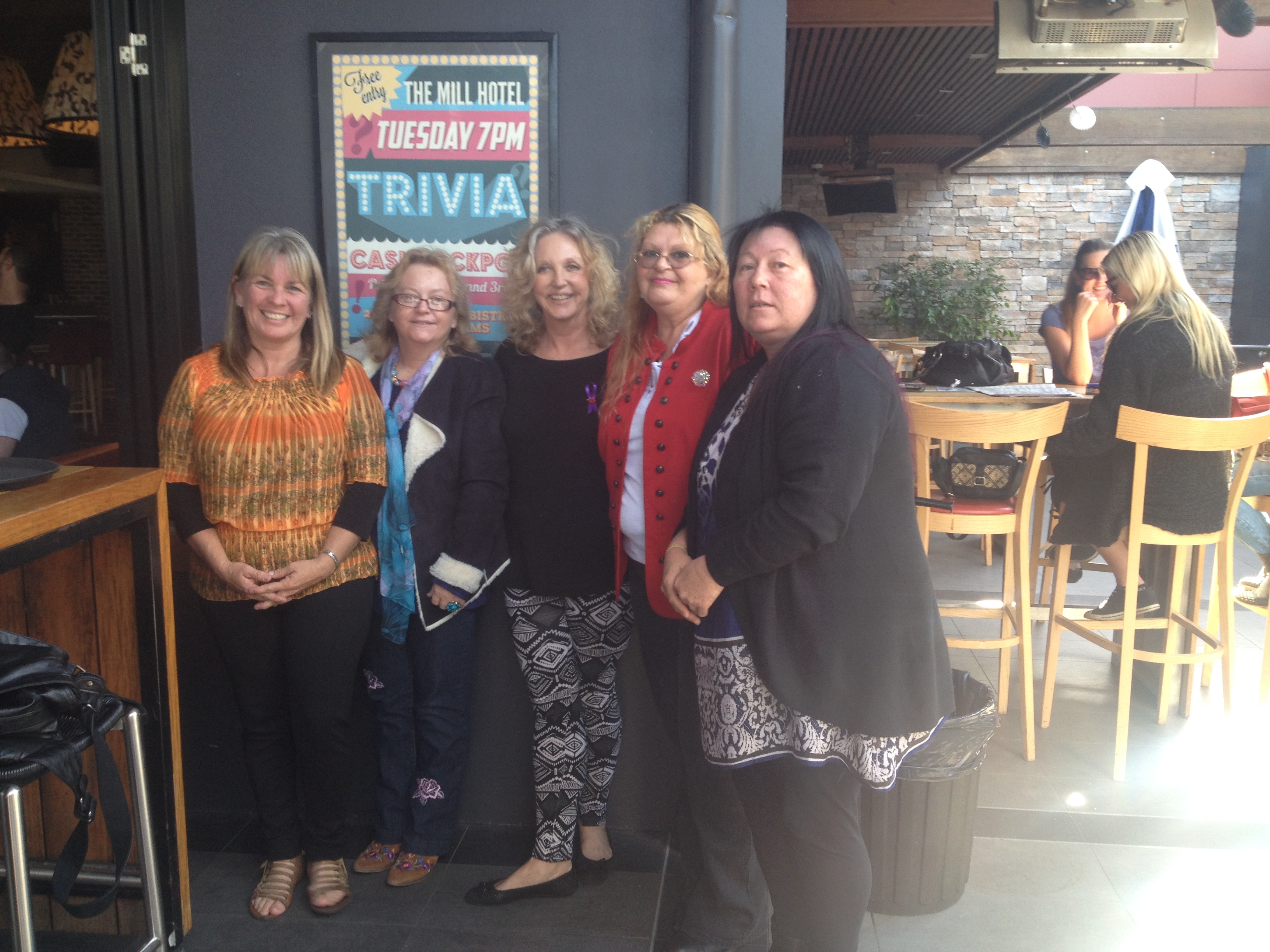
A small group gathered to have lunch and a chat to commemorate the 2nd Anniversary of the NSW apology.  From left to right – Representatives of the national adoptee organisation: Association for Adoptees Inc. Australia – Secretary/ Treasurer:  Mandy Williamson, President: Kerri Saint; Apology Alliance Australia: Dr. Christine A. Cole; Adoptees: Vicki and Alison

Kerri and Mandy flew down from Brisbane to attend the event held at the NSW Parliament on Thursday organised by Jan Barham MLC (Greens).  The day was a great success. We are all very grateful to Jan for taking the initiative to organise the event as well as provide us with a wonderful lunch.

Kerri and I both spoke about the need to implement practical measures as part of the apology process and to ensure that the apology is not a hollow gesture but the first step on a path towards healing for us and reconciliation between us and the NSW government.

Shortly I will post up the talk I gave

Thursday’s event and today’s lunch are both hugely historical and will grow into something much larger – some were disappointed that they did not hear about the meeting at Parliament until too late for them to make arrangements to attend, but all was done on such short notice as the motion to have a day of recognition and a memorial was passed only a week ago.


Posted in My Articles | Leave a comment

INVITATION to Parliament House Event: Day of Recognition of Forced Adoption Apology and Memorial

3 Speakers to discuss the importance of the NSW apology for Forced Adoption Survivors and what  a day of recognition and memorial means for them


Jan Barham MLC
The Greens
Legislative Council, Parliament House
Macquarie Street, SYDNEY 2OOO

Email: Jan.Barham@parliament.nsw.gov.au
Website: http://www.janbarham.org.au

SOCIAL & ECONOMIC JUSTICE – ECOLOGICAL SUSTAINABILITY – GRASSROOTS DEMOCRACY – PEACE & NONVIOLENCE
INVITATION

Forced Adoption Practices APOLOGY
Day of Recognition Launch

When – 10.30am, Thursday 18th September 2014

Where – Parkes Room, Parliament House

This Saturday, 20th September 2014 will be the second anniversary of the NSW Parliament’s Apology for Forced Adoption Practices.

On 11th September 2014, the Legislative Council supported my motion calling for continued redress in relation to forced adoptions.
The motion included a call to declare an annual Day of Recognition, to ensure that the past is not forgotten.

I invite you to come along and hear more about the issue from people who have been part of the movement for change, and who were affected by the practices of the past.

Guest speakers include:
 Ann Symonds, former Chair of the Legislative Council Standing Committee on Social Issues

 Dr Christine Cole, Apology Alliance
 Kerrie Saint, Association for Adoptees Incorporated

Posted in My Articles | Leave a comment

Reproductive slavery: Australia puts children at risk by ‘freeing up’ the adoption market

The on-line publication: The Conversation, features an article authored by Professors Fronek, Cuthbert and Keyes.  The article raises concerns about  a conflict of interest amongst those influencing  intercountry adoption policy and legislation.  Adoptive parents, particularly high profiles, such as Hugh Jackman and Deborra-lee Furness, have the ear of the PM and have undoubtedly a personal vested interest in making it “easier, cheaper and quicker to adopt” for couples like themselves.  According to the Professors the serving of their and those they represent interests are superseding the “best interests of the child”.[1]

The article primarily focuses on intercountry adoption, but I suggest the pro adoption lobby’s influence extends much further and has been quite apparent in domestic adoption policy and legislation. When Tony Abbott and former NSW Premier Barry O’Farrell’s hosted adoptive parent elites at a party at Kirribilli House just prior to  last Christmas, Abbott stated that he was not only going to make it quicker easier and cheaper for adults to adopt overseas, but he was going to free up more children for domestic adoption.  Specifically, those children whose parents he considered “not effective”.  Presumably he meant the poor and vulnerable.  So  it seems young, single women are once again at great risk of losing their newborns via forced adoption.  This should come as no surprise because contemporary adoption relies on market principles of supply and demand. And at present because there are so few babies available and so many affluent infertile adults,  the demand is great.

Over the last 8 years intercountry adoption has fallen globally because of its relationship with kidnapping, child trafficking and criminal gangs.  So adopting a baby or very young infant from overseas now involves years of waiting as many sending countries have closed their intercountry adoption programs.  Coincidently since 2006 there has been a number of law changes, particularly in NSW,  making it easier for child protection officers to remove newborns from their mothers. So in my opinion the focus on domestic adoption by the pro adoption lobby is an attempt to fill the void left by the declining numbers of children coming in from overseas.    Professor Ainsworth discusses the implementation of various laws that now empower social workers to forcibly remove babies at birth in his well researched article ‘Babies for the Deserving’.[2]  He is highly critical of the dubious practice and basically concludes that it is the heralding in of yet another stolen generation.

Since well mobilised activists are fighting back at the reintroduction of Forced Adoption the availability of babies though “surged”[3] has not met demand. So many couples are now turning to surrogacy in countries like Thailand and India. However recent cases have revealed a very dark side to commercial surrogacy – the creation of children for adoption by paedophiles.  If the Australian government had listened to the experience of many adult adoptees here it might not be surprised by this occurrence.  The same could be said if it thoroughly researched the misuse of intercountry adoption by paedophiles

http://rt.com/news/australian-paedophile-us-jail-976/

http://www.nydailynews.com/gay-conn-couple-accused-rape-face-trial-article-1.1310010

http://www.reuters.com/investigates/adoption/#article/part1

Chief Magistrate John Pascoe writes of the creation of children via surrogacy for the benefit of adopting couples:

As the National Committee on Bioethics of Cyprus observed “[T]he use of a surrogate mother conflicts with the principle of human freedom. A new kind of slavery and commercialisation of human beings is created.” In this commercialised arrangement women are often reduced to moveable property and objects of reproductive exchange in a transaction that may more aptly be termed “reproductive trafficking”.

Pascoe acknowledges the suffering of the children created via surrogacy quoting one who states:

Because somewhere between narcissistic, selfish or desperate need for a child and the desire to make a buck, everyone else’s needs and wants are put before the kids[‘] needs. We, the children of surrogacy, become lost. That is the real tragedy.[4]

In another article Pascoe also acknowledges surrogacy and intercountry adoption as ways for paedophiles to access children.

http://www.theaustralian.com.au/national-affairs/family-judge-warns-pedophiles-exploiting-surrogacy-laws/story-fn59niix-1227033721488

It states:

The Chief Judge warns that lack of regulation in many countries “creates a risk that children could be ‘commissioned’ specifically for trafficking or abuse purposes’’.

“Tragically this is a risk that has too often been realised,’’ he says. Chief Judge Pascoe quotes from a UNICEF report that ­suggests that one in four inter-country adoptions in Germany has a “commercial or criminal background, some of which have links to facilitating pedophilia’’.

Unfortunately Judge Pascoe believes that making commercial surrogacy legal in Australia will stop the exploitation of surrogates and the provision of children to paedophiles. I do not agree.

The Forced Adoption Program operating in Australia for decades was in effect a forced surrogacy service for infertile, white married couples.  Speaking to  my experience and thousands like me I carried my baby for 9 months for a married couple.  Whilst pregnant I was continually told that because I was unwed I was unfit to parent therefore was carrying a baby not for myself nor its father, but for a “respectable married couple” who would give “it all the things you cannot”.   A married couple was selected and matched with my baby prior to birth. So  I was told from the time I met the social worker at Crown St Women’s Hospital  when I was only 5 months pregnant, that the baby I was carrying was not mine it belonged to someone else.  It did not matter what I said my baby was targeted for adoption and assigned to a specific couple during my pregnancy. The coercion and brain washing was overwhelming and my sense of powerlessness complete.

On having being told explicitly that I was carrying a child for an infertile married couple I was then expected to relinquish all rights to my child and to become absolutely invisible in the process.  If I objected, which I did,  particularly when admitted to the hospital, I was heavily drugged and restrained before during and after the birth.  For my pregnancy and my healthy newborn I was not paid but rather was expected to work for 60 to 70 hours a week for $10.  This was, as Pascoe rightly claims, reproductive slavery. Many mothers were expected to perform hard labour in laundries within mother and baby Homes for their board and keep. We were not only reproductive slaves but labour slaves as well.

Pascoe discusses  how East European pregnant women are transported across borders and their children adopted by French or Italian couples.

http://www.federalcircuitcourt.gov.au/pubs/docs/Speech%20-%20Pascoe%20-%20LegalWise%20-%202012.doc

In Australia many young pregnant women were also transported across borders and held captive in mother and baby Homes and then had their babies forcibly taken and given to strangers they never met.  I commend the Chief Magistrate for acknowledging the damage done to overseas surrogates and their children.  I do not agree, however, that making commercial surrogacy legal in Australia will stop the abuses, as Pascoe suggests, because the Australian legal system is superior. The abuses he imagines it will prevent have already occurred.  And did so on a massive scale. The Australian legal system did not protect us or our infants.  Imagine nearly 10,000 healthy babies taken for the adoption market in one year alone (1971-1972). Taken from their healthy mothers, who were not carrying another woman’s egg, who were most likely in their first committed relationship, so were in love with the father of their child.  We did not have the luxury of imagining we were carrying another couple’s baby – no we were carrying our own. What happened to us was the worst kind of surrogacy – the theft of our children for the domestic adoption market to satisfy demand – over which we had no control whatsoever.  When the laws changed and we finally were able to meet our now adult children many of us found them full of rage thinking we had abandoned them.  Many were damaged because they had been sexually and/or physically abused. Many rejected the mother that bore them.  Some mothers never met their children because before they could they had committed suicide:  the suicide rate amongst adoptees being four times greater than their non-adopted peers.

What needs to be understood is that when wealthy, powerful individuals feel entitled to a less powerful woman’s womb/baby,  exploitation occurs, irrespective of a country’s laws. No matter how it is spun, no matter what weasel words are used – as Pascoe has identified it is reproductive slavery.

We are presently watching as powerful individuals referred to at the beginning of this post, are manipulating law and social policy to advance their personal agenda – even if it is not in the best interests of children.  And certainly not in that of the exploited mother’s!

We supposedly had laws in place to protect us, they did not.  Our bodies were exploited for the babies we could produce, for the cheap labour we could provide and then we were thrown away as if we were rubbish.  Reproductive slavery and the trafficking of children will only stop when society really values the human rights of all its citizens. When it is understood that certain privileged individuals are not entitled to exploit citizens that are poorer, weaker or to use Abbott’s words: “not effective”.  It is not the exploited that should be regulated it is the exploiters. It is not only the exploited that need to know their rights, but for exploiters to understand that those they wish to exploit do indeed have rights – whether that is having rights over their own bodies, the right to parent their own children – even if that is with support – and the rights of children to be brought up within their own family, culture, country and to know their biological heritage. We who have lived through the era of Forced Adoption know what it is like to be a surrogate, to be exploited and have the laws of the land totally fail to protect.  No, commercial surrogacy, intercountry or domestic adoption that rely on the exploitation of one group by another should not be part of any civilised community. Particularly one that declares it values human dignity and rights.


[1] http://theconversation.com/australia-puts-children-at-risk-by-freeing-up-the-adoption-market-31064

[2] (Babies for the Deserving: see Submission 18  http://www.aph.gov.au/Parliamentary_Business/Committees/Senate/Community_Affairs/Completed_inquiries/2010-13/commcontribformerforcedadoption/submissions)

[3] According to Brian Robins (SMH: 2010, April, 10) in an article titled: ‘Surge in infants taken from mothers after DOCS crackdown’  the number of newborn babies taken by the Department of Community Services has risen sharply in the past two years: “Each day in NSW an infant younger than four weeks old will be removed from the mother”.  This is a rise of 70% in two years.  Prue Goward is quoted as stating: “They are removing children as soon as possible … before they are too damaged’”   But the question Robins poses is: “Are they simply creating another stolen generation?”

[4] http://www.federalcircuitcourt.gov.au/pubs/docs/Speech%20-%20Pascoe%20-%20LegalWise%20-%202012.doc


Posted in My Articles | Tagged , , , , , , , , , , , , , , , , , , , | 1 Comment

Call by Adoptees to be included in Royal Commission into Child Sexual Abuse

A comment from the article about Kerri Saint cited in the previous post

  • My heart goes out to you Kerri. I was adopted in the 1950’s and like you was subjected to a great deal of abuse. The assumption always seems to be that adopted children are loved.  After all, weren’t unmarried mothers asked how they could be so selfish as to want to keep their children when there were families out there wanting to give them loving homes. My memories go back to the age of two and a half and there is not one happy thing I can remember. I was so alone, fearful and powerless, tormented, abused and manipulated by my adoptive parents and brothers. We have rightly had apologies to stolen aboriginal children, child migrants, children in state care and mothers whose children were stolen and adopted out. We are to have an enquiry into child sexual abuse in institutions and by the clergy. I was stolen, I was sexually abused but nobody mentions me because I was adopted into a “loving” family.
Posted in My Articles | Leave a comment